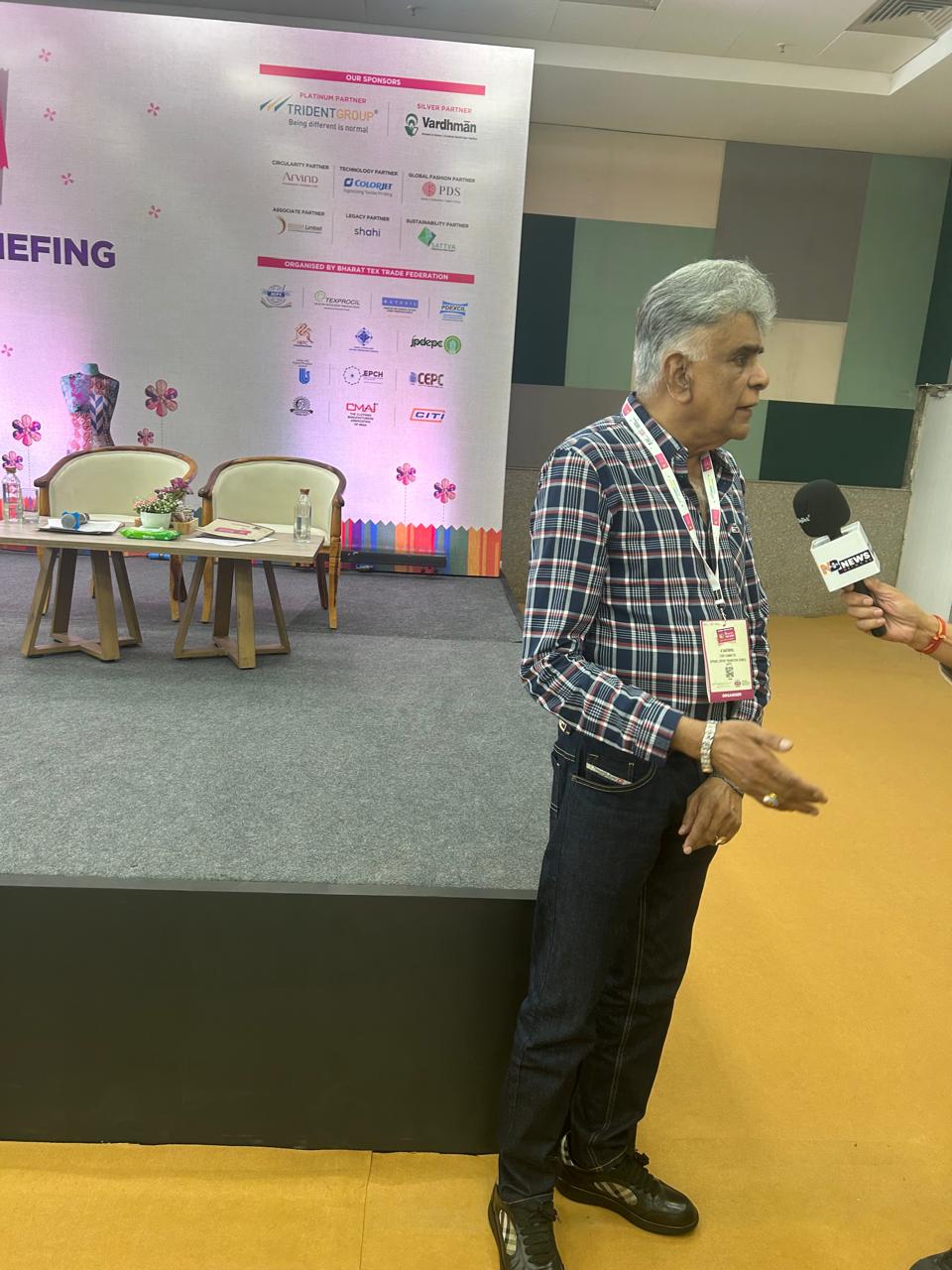
Salil Chawla, Director, DFU Publications, interacted with Dr. A. Sakthivel, Chairman of AEPC, on the sidelines of the Bharat Tex 2026 press briefing. Presented below are excerpts from the conversation.
India’s Expanding FTA Network Signals a Promising Decade for the Apparel Industry
Speaking on the opportunities emerging from India’s expanding network of Free Trade Agreements (FTAs), Shakti Wadhwa highlighted that India is expected to have trade agreements with around 38 countries by the end of the year. Collectively, these partner nations represent nearly 65% of the global population and include many of the world’s major developed economies.
He emphasised that the apparel sector stands to benefit more significantly from FTAs than many other industries. Unlike sectors such as automobiles or engineering goods—where developed countries maintain substantial domestic manufacturing capabilities—the apparel industry in most developed economies relies heavily on imports. This creates a favourable environment for Indian apparel exporters, as duty-free market access under FTAs can substantially enhance their competitiveness.
Another key strength, according to Wadhwa, is India’s integrated textile value chain. India possesses a robust domestic base for producing a wide range of raw materials and textiles, including natural fibres such as cotton, man-made fibres, and fabrics. In contrast, several competing apparel-exporting nations depend extensively on imported raw materials and fabrics for manufacturing.
This integrated supply chain, combined with preferential market access through FTAs, positions India strongly to expand its global apparel exports. Wadhwa expressed confidence that these structural advantages could usher in a period of sustained growth, describing the coming decade as a particularly promising one for India’s apparel industry.
Concluding his remarks, he extended his best wishes to the industry, expressing optimism about the opportunities that lie ahead.


 CONTACT US
