



_large.jpg)

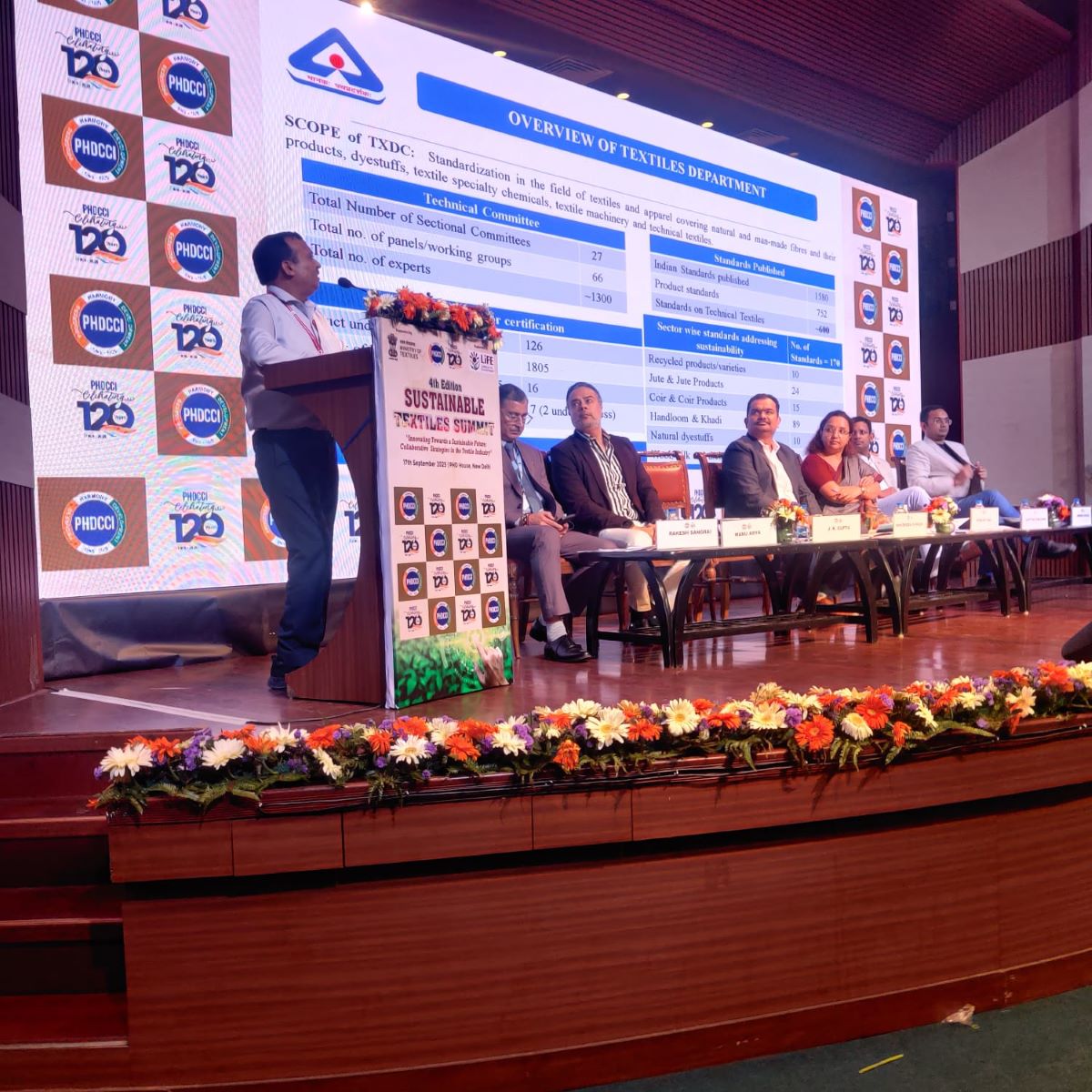
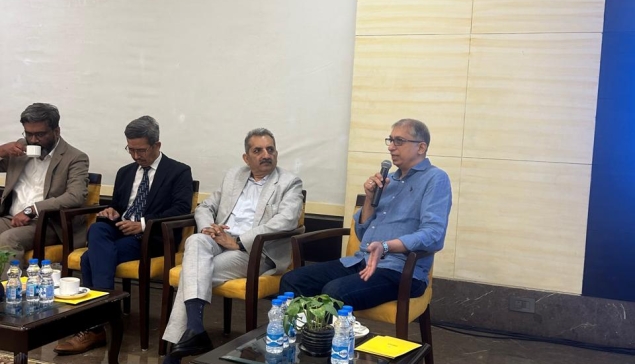
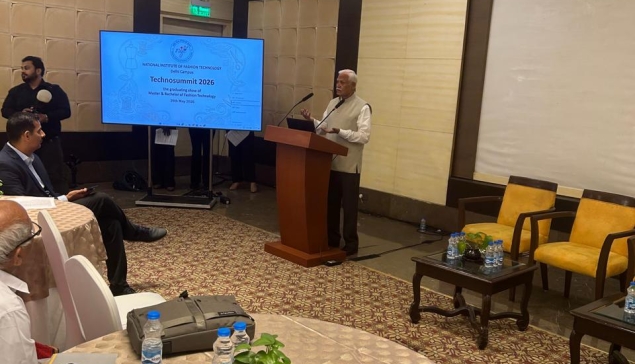
Address by Dr. J.K. Gupta serves as Scientist E/Director and Head of the Textiles Department at the Bureau of Indian Standards (BIS).
4th Edition Sustainable Textiles Summit 2025 | September 17, 2025
Compiled by: Salil Chawla, Director, DFU Publications.
Over the years, we have undertaken significant work across a diverse spectrum of textiles—ranging from jute, coir, and silk to natural dye-stuffs, technical textiles, and sustainable materials. Many of these products are inherently eco-friendly, but our commitment goes further.
India holds a leadership role in the global standardization of natural dyes, with 27 specialized committees working across areas spanning man-made fibers, technical textiles, machinery, and more.
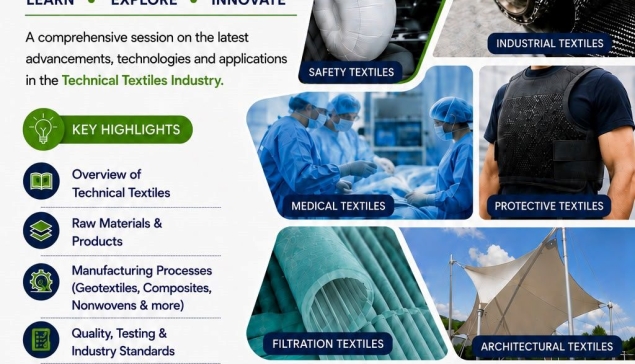
Within technical textiles alone, we cover 12 crucial segments, from agro-textiles and medical textiles to smart textiles and specialty fibers.
At the international level, BIS represents India in 18 ISO committees on protective clothing, floor coverings, textiles, and machinery.
We aim to expand this footprint and actively invite experts to join our efforts, offering full logistical and financial support for participation in global forums.
We have already nominated over 66 experts to contribute to 100+ ISO draft standards and are hosting the prestigious IEC 2025 meeting with delegates from over 100 countries.
India also leads key committees on menstrual product safety, reusable healthcare textiles, and sustainability-linked standards.
Our sustainability initiatives include mapping 1,600 Indian standards to the UN SDGs, developing guidelines for recycled materials, and creating eco-labelling and resource-efficiency frameworks.
We are drafting standards for recycled polyester fibers, shoddy wool, reusable medical textiles, and post-consumer waste management—ensuring safe processes, from sorting to final product certification.
By integrating recycled materials into mainstream products—denim, agro-textiles, technical fabrics—we are aligning Indian standards with global benchmarks, driving both sustainability and circularity in textiles.
We invite industry experts to join this transformative journey to build a greener, more responsible future for textiles and apparel (T&A).


 CONTACT US
