




_large.jpg)
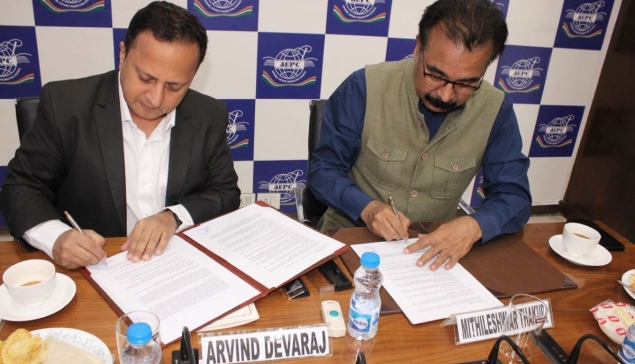

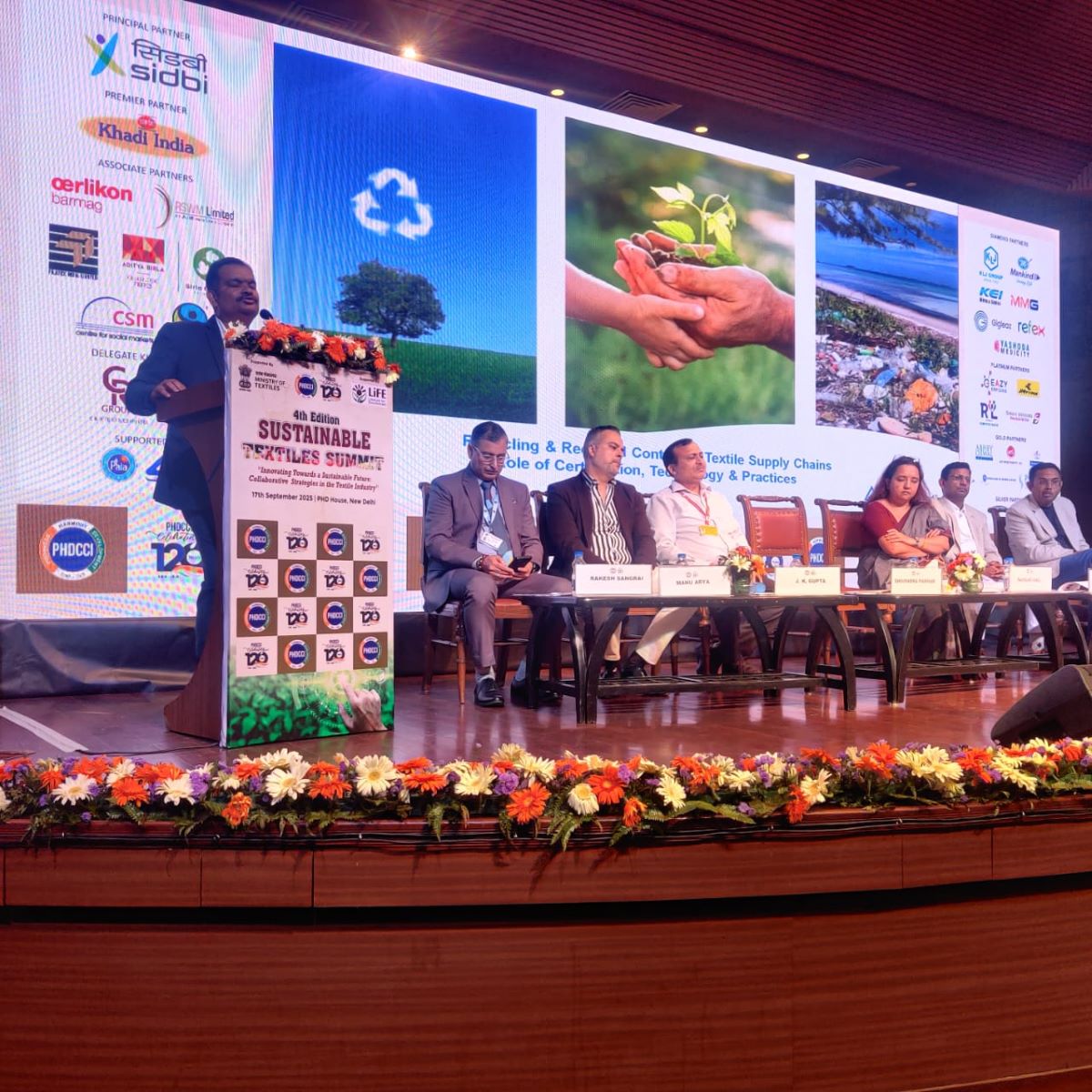
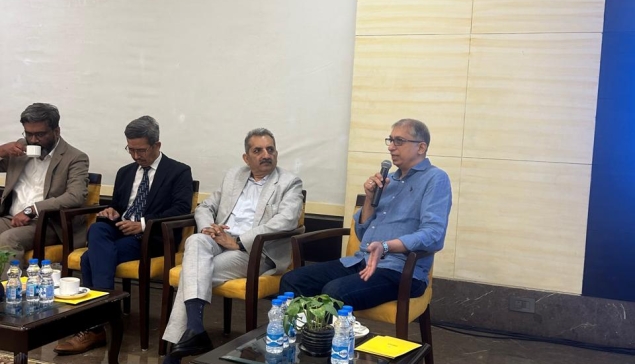
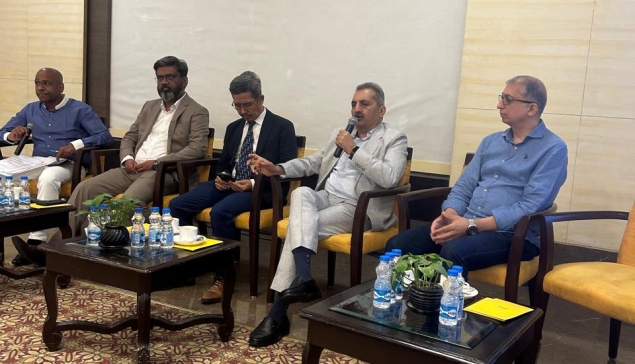
Address by: Shivendra Parmar-Assistant General Manager-Technical, TUV Rheinland india pvt ltd.
4th Edition Sustainable Textiles Summit 2025 | September 17, 2025
Compiled by: Salil Chawla, Director, DFU Publications.
Many textile plants have already taken steps toward Zero Discharge of Hazardous Chemicals (ZDHC), significantly reducing water consumption through recycling and reusing water. This not only conserves resources but also minimizes the need for extensive testing.
Sustainability, however, is a vast ocean. In the textile sector, it especially revolves around wastewater monitoring, chemical management, and raw material safety.
Through MRSL (Level 1, 2, and 3) checks at the raw material stage, we ensure that hazardous substances are eliminated early in wet processing. This guarantees that wastewater exiting factories is non-hazardous and safe for the environment, supporting global sustainability goals.
The Textile Waste Challenge
India generates nearly 7.8 million tons of textile waste annually, yet only a small fraction is recycled. Most ends up in landfills.
Synthetic fibers are especially problematic as they are not biodegradable and take decades to break down.
Cotton, though natural, is extremely water-intensive—a single t-shirt requires about 1,000 liters of water to produce.
Recycling therefore supports both circular economy principles and the preservation of natural resources.
The Push for EPR (Extended Producer Responsibility)
Globally, industries such as toys, plastics, and electronics already follow mandatory EPR frameworks. A similar approach for textiles is urgently needed.
In Europe, laws now require textile suppliers to monitor waste and document recycling content.
Indian suppliers, especially exporters, will soon need to adopt EPR and traceable recycling systems.
Targets—like those in plastics—should be set for textiles, mandating a minimum percentage of recycled content.
Recycling Methods
Mechanical Recycling – Cost-effective but often reduces quality (high-quality input → lower-quality output).
Chemical Recycling – Breaks textiles into monomers (e.g., polyester), allowing true closed-loop recycling (t-shirt → new t-shirt).
Open loop – Converting textiles into lower-value products (e.g., insulation).
Closed loop – Recycling textiles back into equivalent products.
Market Trends and Environmental Impact
India’s textile resale and recycling market is projected to grow from USD 328 million (2024) to USD 427 million (2033) at a CAGR of 2.8–5.7%.
Around 52–64% of textiles are polyester, fossil-fuel based, contributing significantly to CO₂ emissions and long-term pollution.
The Role of Certification
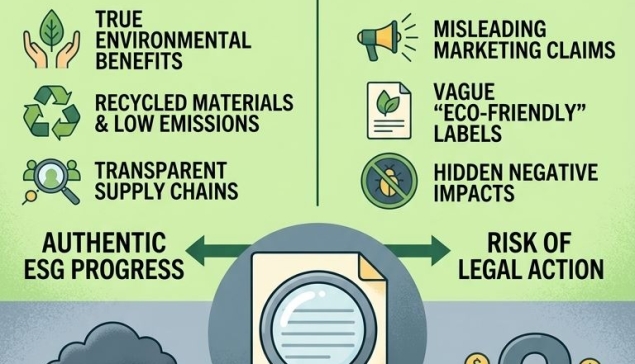
To avoid greenwashing and false claims, recycling must be verified through certifications such as DIN CERTCO, EN ISO 14021, and EN 15343.
Certification involves on-site verification, documentation review, and audits.
Validity extends up to five years, with annual surveillance audits.
This is increasingly mandatory in Europe, the US, and other markets.
Capacity Building and Training
Worker training is essential to improve fiber identification and sorting.
Simple techniques—touch, feel, microscopy—help distinguish natural vs. synthetic fibers.
Training ensures better recycling efficiency and reduces contamination in sorting processes.
Call to Action
Policy Makers: Introduce a textile EPR framework, similar to plastics.
Industry: Invest in mechanical and chemical recycling technologies.
Brands: Adopt take-back schemes in showrooms, ensuring genuine recycling and traceability.
Workers: Provide regular training for accurate sorting and handling.
At TUV, we support this transformation by offering testing, certification, consultancy, and root-cause analysis—helping the textile sector move towards true circularity and global compliance.


 CONTACT US
