




_large.jpg)


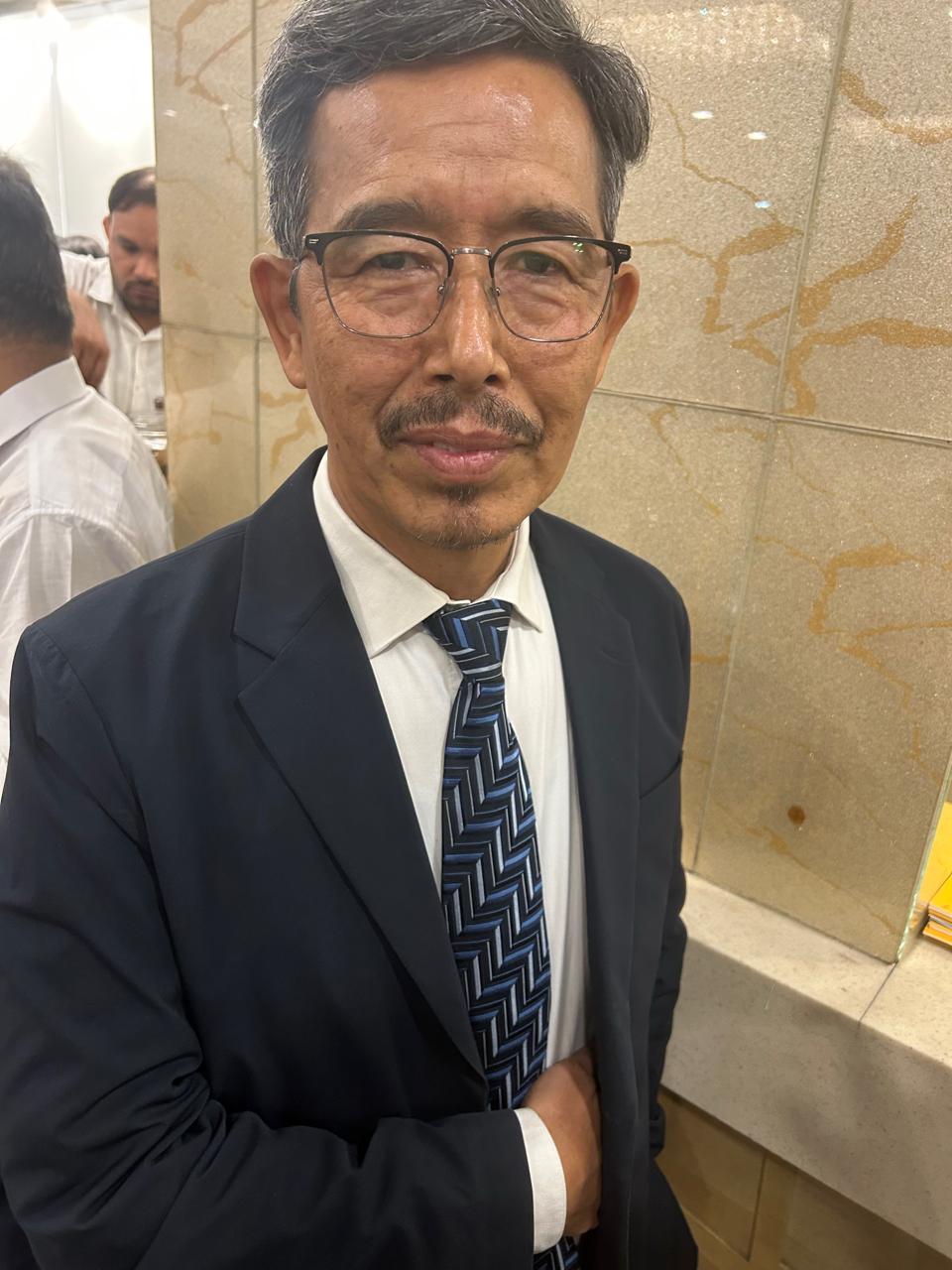
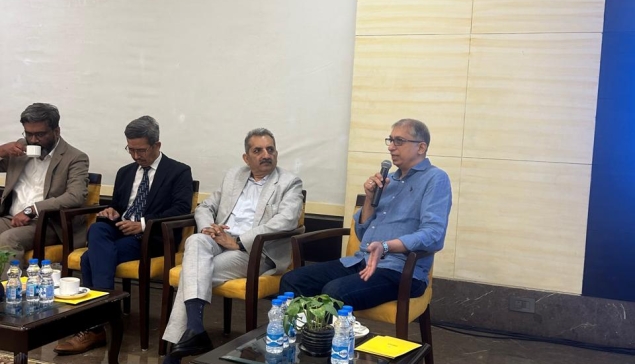
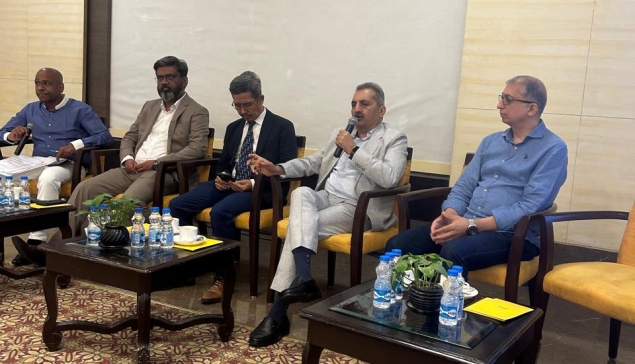
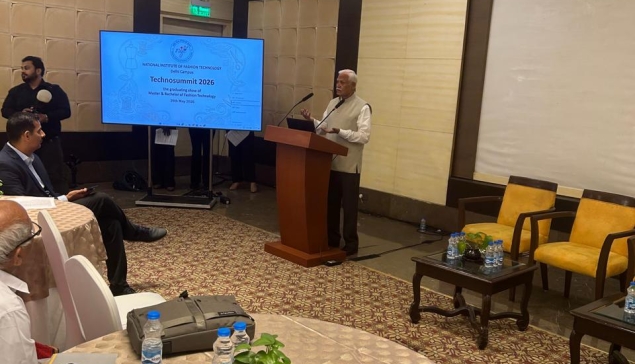
Salil Chawla, Director, DFU Publications, interacting today on the sidelines of Technosummit 2026 with Dr Ashok Kumar, Sector Expert and Former Deputy Director General, Bureau of Energy Efficiency, on the textile industry and its sustainability quotient.
“There is a dire need in this industry to impress upon everyone the importance of sustainability, and it is essential that the industry takes this matter with the utmost sincerity. Thank you, Chawla sahib, for giving me the opportunity. I am here at a NIFT event, and many experts are present on this occasion.
As an operating professional, I have been associated with the Bureau of Energy Efficiency since 2011, when the textile industry was brought under a mandatory energy efficiency programme called the PAT scheme.
At present, around 150 units have been assigned targets to improve efficiency, so that they can ultimately reduce their carbon footprint and become more competitive in a market where efficiency and other sustainability-related criteria are increasingly being demanded.
Many industries, particularly larger ones, are now actively engaging with this agenda and recognise that sustainability, or the green edge, is crucial for business competitiveness. That is why many are working on efficiency improvement, fuel switching, and increasing the use of biogenic energy sources to reduce emissions. Several have also improved machine and compressor efficiency, used back-pressure turbines to generate electricity, and adopted micro-turbines. They are also exploring ways to improve energy efficiency by reducing water usage and through similar measures.
So the industry is gearing up and taking this seriously. From the Bureau of Energy Efficiency side, when I was there, we received very good support from industry. The textile sector has also embraced the country’s broader commitment and, in my view, has contributed quite substantially.
When it comes to MSMEs, there is still a lot to be done, because small industries are not as organised. They face a lack of knowledge, funding, resources, and an enabling ecosystem. But the good news is that the government has introduced several supporting programmes.
The Ministry of Power has launched a programme called Aditi for interest subvention. The Ministry of MSME also has schemes, if I remember correctly, including SPICE and another one, both of which provide capital subsidy, interest subvention, and support for capacity building, training, and education.
So several initiatives are in place, and MSMEs are beginning to benefit from them. Of course, as you mentioned, many MSME products now have export linkages, and with the upcoming CBAM in Europe, there is a growing concern around compliance. That concern has also been reflected in the provisions of the FTA.”


 CONTACT US
