





Cradle to Cradle®: Paving the Way to Sustainable Textiles
By Salil Chawla Content Strategist, DFU Publications
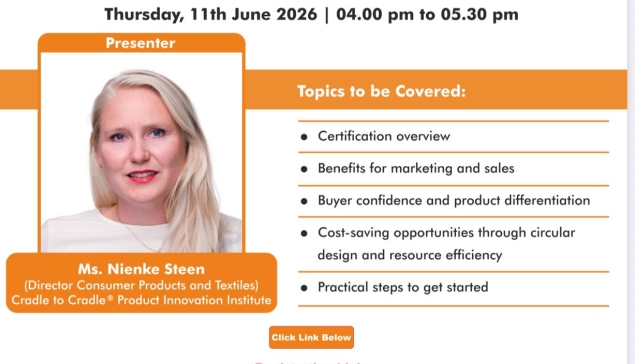
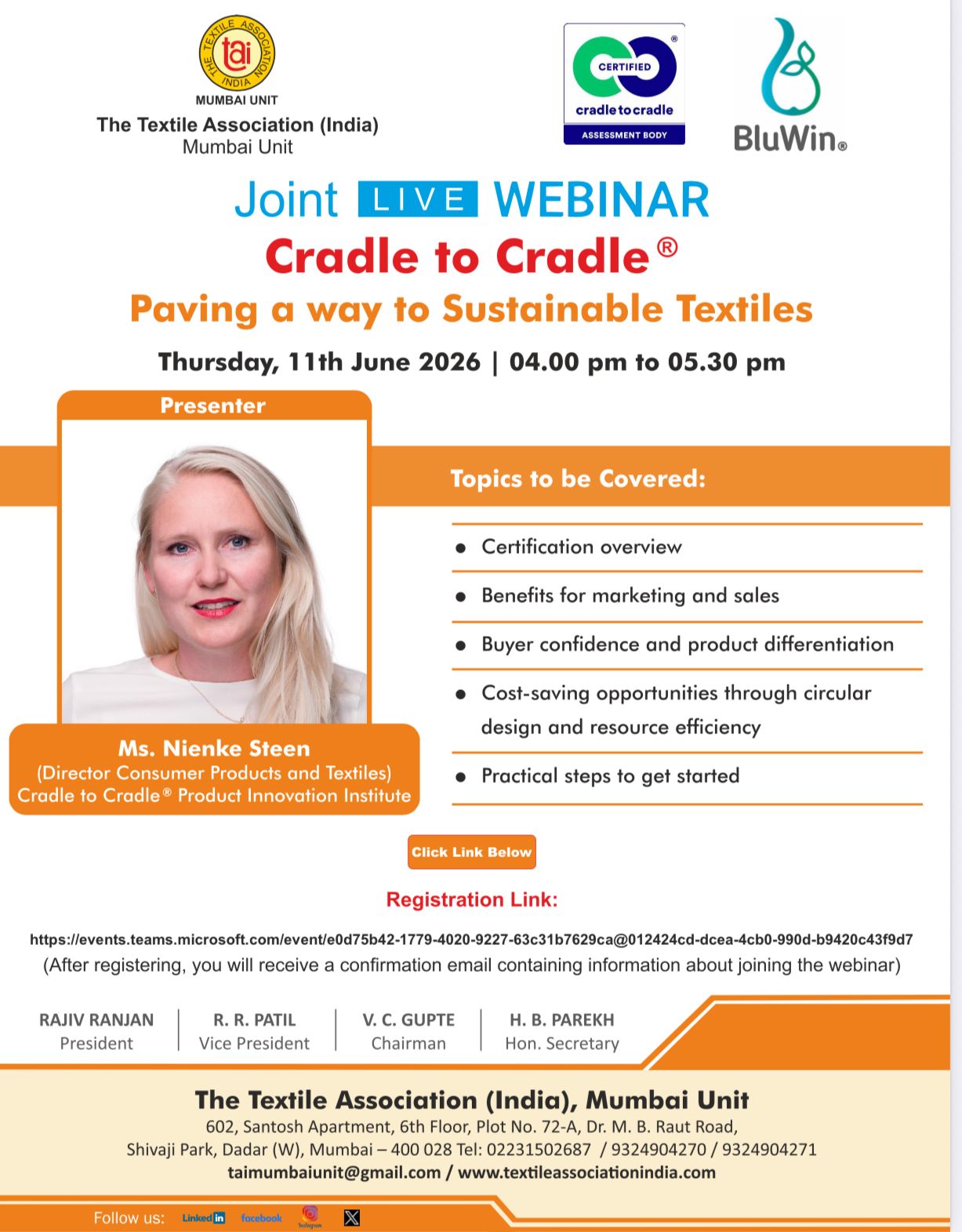
Ms. Nienke Steen, Director of Consumer Products and Textiles at the Cradle to Cradle® Product Innovation Institute, delivered a compelling presentation during today’s live webinar on “Cradle to Cradle® – Paving a Way to Sustainable Textiles.” Her message was clear: eliminating hazardous chemicals from textiles is not optional—it’s essential.
“Why are we still using hazardous chemicals in products we wear, consume, and put on our skin?” Steen asked. “Especially for children and older people, it could be super harmful. Let’s create a standard to eliminate them.”
Steen emphasized that sustainability isn’t just about “safe chemistry” or reducing negative impact. It demands a holistic approach to product design that enables materials to cycle in endless loops. Cradle to Cradle® defines two cycles:
Biological Cycle: Products biodegrade and return nutrients to nature (e.g., shampoos, compostable garments)
Technical Cycle: Materials are mechanically or chemically recycled (e.g., durable garments).
While most designers focus on the technical cycle due to textile durability, Steen noted it’s possible to create compostable garments—though industrial composting infrastructure for textiles remains limited in many regions, including India.
Circular Economy: Environmental and Business Imperative
Steen framed circularity as a non-negotiable business decision, especially for EU market access. Upcoming EU legislation mandates eco-design, recycled content, durability, chemical safety, and a Digital Product Passport—all covered by Cradle to Cradle® certification.
Key insights:
$25 billion of global GDP is lost annually due to waste
Switching from virgin to recycled materials reduces carbon emissions by 40–70%
Circular practices can cut biodiversity loss by 50%
Ellen MacArthur Foundation identifies a $700 billion business opportunity by 2030 through repair, resale, rental, and remaking models
Current global circularity is only 6.9%. Steen urged doubling this by 2033, noting 80% of environmental impact is decided at design stage.
EU Regulations Demand Validation
Three legislative pillars reinforce circularity:
Extended Producer Responsibility: Sustainable products get fee discounts
ESPR: Requires Digital Product Passports
Empowering Consumer Directive: All sustainability claims must be third-party validated by September 2026
Cradle to Cradle® certification fulfills these requirements, enabling bold, trustworthy sustainability storytelling.
“The solution is in our hands,” Steen concluded. For India’s textile sector, embracing circular design isn’t just environmental responsibility—it’s a strategic pathway to global market access and long-term business viability.
CREDITS: The text is derived from the recording of this webinar. The content has not been edited and reviewed by us.


 CONTACT US
