




_large.jpg)
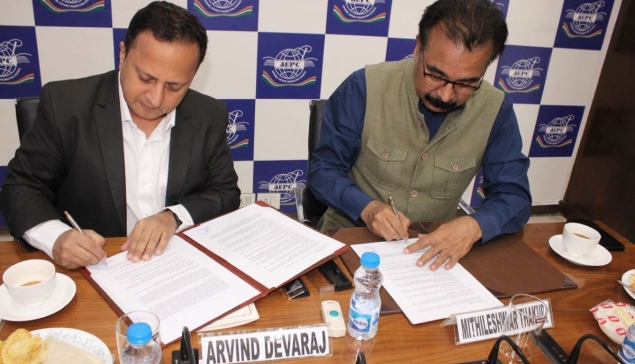

Commenting on the Union Budget 2026–27, Dr. A. Sakthivel, Chairman, Apparel Export Promotion Council (AEPC), said that, “The Budget is forward-looking, growth-oriented and balanced, reflecting the Government’s strong commitment to building a competitive, resilient and globally integrated textile and apparel sector.” This budget provides a roadmap for strengthening India’s textile and apparel ecosystem, with a strong focus on self-reliance, sustainability, employment generation and global competitiveness. AEPC welcomes the government’s clear commitment to positioning India as a resilient and future-ready textile powerhouse, he added.
“The Budget 2026–27 provides a significant boost to SMEs and MSMEs, which form the backbone of India’s apparel and textile exports. The emphasis on providing liquidity, ease of exports, particularly through customs-related reforms and simplified documentation procedures, will reduce transaction costs, enhance efficiency, and improve the overall ease of doing business for exporters,” Dr. Sakthivel stated.
Further Chairman said, the strengthening of Trade Receivables Discounting System (TReDS), with mandatory onboarding of Central Public Sector Enterprises (CPSEs), credit guarantee support through Credit Guarantee Fund Trust for Micro and Small Enterprises (CGTMSE), linkage with Government e Marketplace (GeM), and introduction of TReDS receivables as asset-backed securities, will greatly enhance liquidity, access to affordable finance and cash-flow stability for MSMEs.
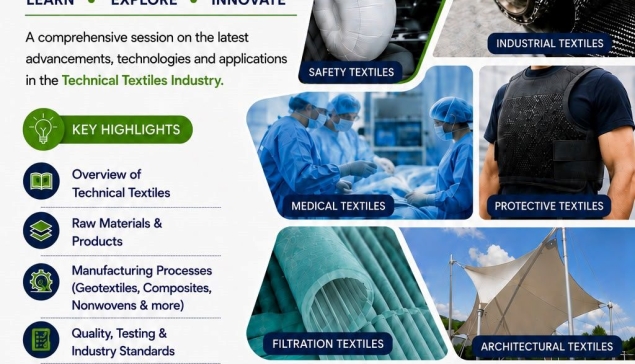
AEPC also welcomes the proposal to set up Mega Textile Parks in challenge mode, with a focus on value addition in technical textiles, which will attract investment, boost scale, and strengthen India’s presence in high-growth segments.
Also, the Textile Expansion and Employment Scheme to modernise traditional clusters through capital support for machinery, technology upgradation, and common testing and certification centres will greatly enhance productivity, quality and employment opportunities, particularly in MSME-dominated clusters.
The announcement of the National Fibre Scheme is a significant step towards self-reliance across natural fibres such as silk, wool and jute, man-made fibres and new-age fibres. This integrated approach will help India build a robust raw material base and reduce import dependence while supporting innovation. The launch of the Mahatma Gandhi Gram Swaraj Initiative will further energise khadi, handloom, and handicrafts, promoting inclusive growth and rural livelihoods.
The launch of Samarth 2.0 to modernise and upgrade the textile skilling ecosystem through collaboration with industry and academic institutions will help bridge skill gaps and promote employment especially for youth and women.
The Tex-Eco Initiative is a timely and much-needed intervention to promote globally competitive and sustainable textiles and apparel. This will further reinforce India’s image as a trusted supplier of environmentally responsible fashion in international markets.
Trade facilitation measures such as recognition of trusted importers, reduced cargo verification, and factory-to-port clearance using electronic sealing will significantly reduce logistics costs and improve ease of doing business.
The Chairman AEPC welcomed the National Handloom and Handicrafts Programme, which seeks to integrate and scale up existing schemes.
Dr. Sakthivel overall expressed confidence that the Union Budget 2026–27 will accelerate export growth, strengthen domestic manufacturing, promote sustainability, and support India’s journey towards becoming a global textile and apparel powerhouse, in line with the vision of a Viksit Bharat.
CREDITS: PR received from AEPC India. The content has not been edited and reviewed by us.


 CONTACT US
