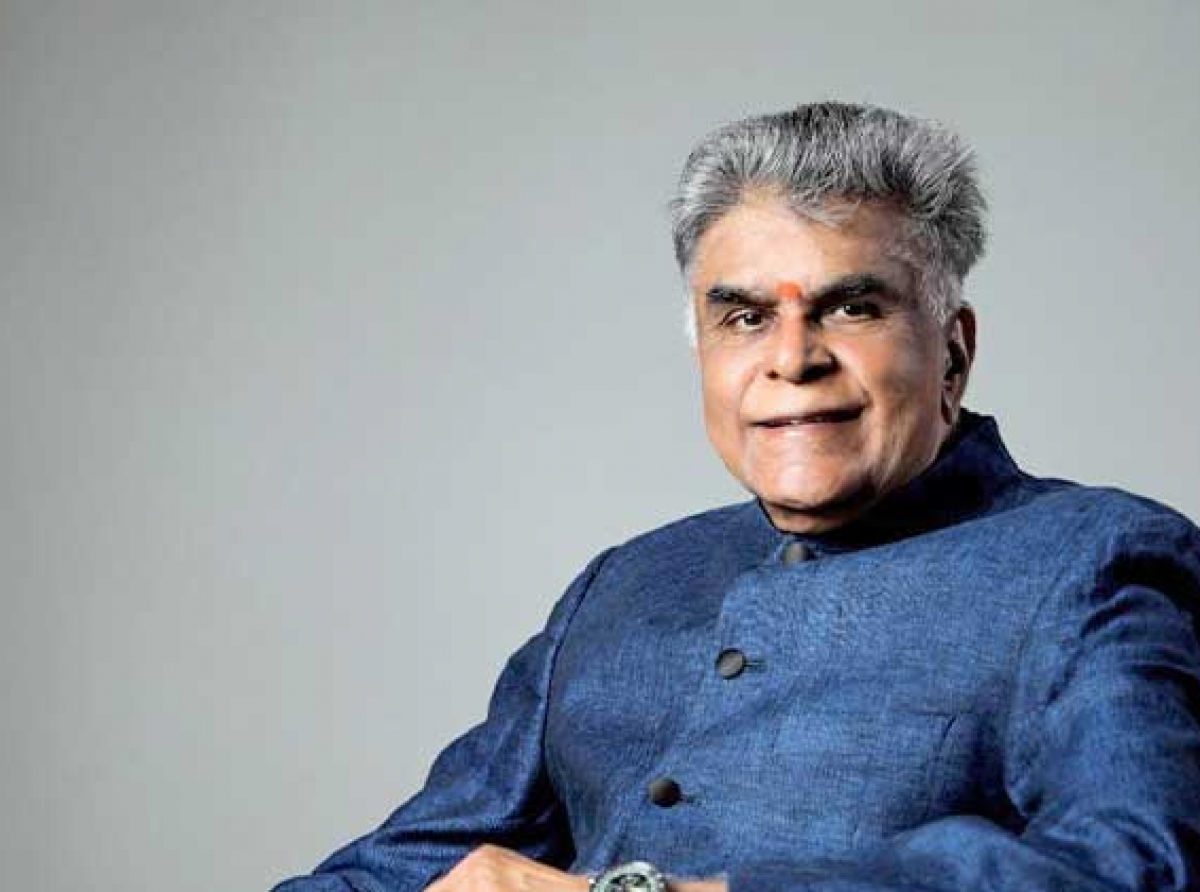
Chairman AEPC Dr A Sakthivel thanks government for consistent and proactive support to the RMG industry.
Speaking on the wishlist of the garment industry, before the Union Budget, Dr. A. Sakthivel, Chairman, AEPC, said, “The Indian apparel sector is currently facing an exceptionally challenging environment, with sharp tariff shocks in key markets such as the United States, coupled with prolonged geopolitical uncertainties that continue to disrupt global trade flows, logistics and demand sentiment.
At this critical juncture, the industry looks to the Union Budget for targeted, time-bound interventions that can enhance competitiveness, safeguard employment, and sustain export growth.”
Further Dr Sakthivel said, “The apparel sector is not seeking blanket support, but rather temporary, and growth-oriented interventions to address extraordinary external shocks and strengthen India’s position as a reliable global sourcing hub.” We sincerely thank the Government for its consistent and proactive support to the RMG industry, which has been instrumental in building resilience and competitiveness.
The upcoming Budget presents an opportunity to further reinforce exports as a key engine of growth, while enabling the industry to transition toward greater scale, advanced technology and sustainability,” he added.
Few of the important demands made by AEPC to the government are as follows:
Introduction of a Focus Market Scheme (FMS) for Apparel Exports to the USA
The sudden imposition of an additional 50% tariff on textile and apparel exports to the U.S. has severely impacted the cost competitiveness of Indian exporters in one of our largest markets. In this context, AEPC strongly recommends the introduction of a Focus Market Scheme (FMS) specifically for apparel exports to the U.S.
Under the proposed scheme, exporters should be provided freely transferable incentive scrips equivalent to 20% of the FOB value of exports, aligned with the period for which the additional U.S. tariff remains in force.
This would directly offset the tariff burden, ease liquidity pressures, and help Indian exporters retain market share.
Strengthening Interest Subvention under Export Promotion Mission
The current interest subvention of 2.75% with a cap of ₹50 lakh per year is inadequate given rising borrowing costs.
We request an increase in the interest subvention rate to 5%, along with relaxation of the ₹50 lakh annual cap, to meaningfully support MSME exporters.
Additionally, loan moratoriums falling due between 1st September and 31st December 2025 should be extended, offering much-needed breathing space during this period of global uncertainty.
Accelerated Depreciation for Technology and Capacity Upgradation
To facilitate rapid modernization and improve liquidity, AEPC proposes 100% accelerated depreciation over two years for export-oriented units on eligible capital assets. This measure does not result in long-term revenue loss for the exchequer, but provides immediate cash-flow support, enabling investments in advanced machinery, energy efficiency, and productivity enhancement—critical for competing in global markets.
Extension of the 15% Concessional Tax Rate under Section 115BAB
The expiry of the 15% concessional corporate tax rate for new manufacturing companies under Section 115BAB on 31 March 2024 has reduced India’s attractiveness for fresh investments in apparel manufacturing. Reintroducing this provision would encourage new capacity creation, job generation and scale-based efficiencies, while reinforcing India’s long-term export competitiveness vis-à-vis competing sourcing destinations.
New Technology Upgradation Scheme for Micro Units
With ATUFS having expired on 31st March 2022 and no replacement have been announced; there is a pressing need for a new scheme focused on technology upgradation for micro units in the MSME segment.
Since the PLI scheme does not cover Micro industries within its ambit, introducing such a scheme is crucial to drive investment, employment, and increase India’s competitiveness.
Affordable Sustainability Financing through a Green Transformation Fund
Global buyers, particularly in the EU and other developed markets, are increasingly mandating ESG and sustainability compliance. To enable Indian apparel manufacturers—especially MSMEs—to meet these requirements, we propose the creation of a dedicated Green Transformation Fund.
This fund should provide long-term soft loans at a maximum interest rate of 5%. It will support garment factories in the domestic procurement or import of sustainability- and green manufacturing-related capital infrastructure (machineries and equipments), enabling the industry to adopt eco-friendly practices and meet global sustainability standards.
Read our latest issue
Reduction of GST on Textile Machinery
To ease the capital investment burden and encourage modernization, AEPC requests a reduction in GST on textile and apparel machinery from 18% to 5%. Lower GST will improve cash flows, accelerate technology adoption, and support productivity enhancement, especially for MSMEs.
CREDITS: PR received from AEPC India official id. The content has not been edited and reviewed by us.
solution that fosters a more responsible global trade ecosystem.


 CONTACT US
