






_large.jpg)


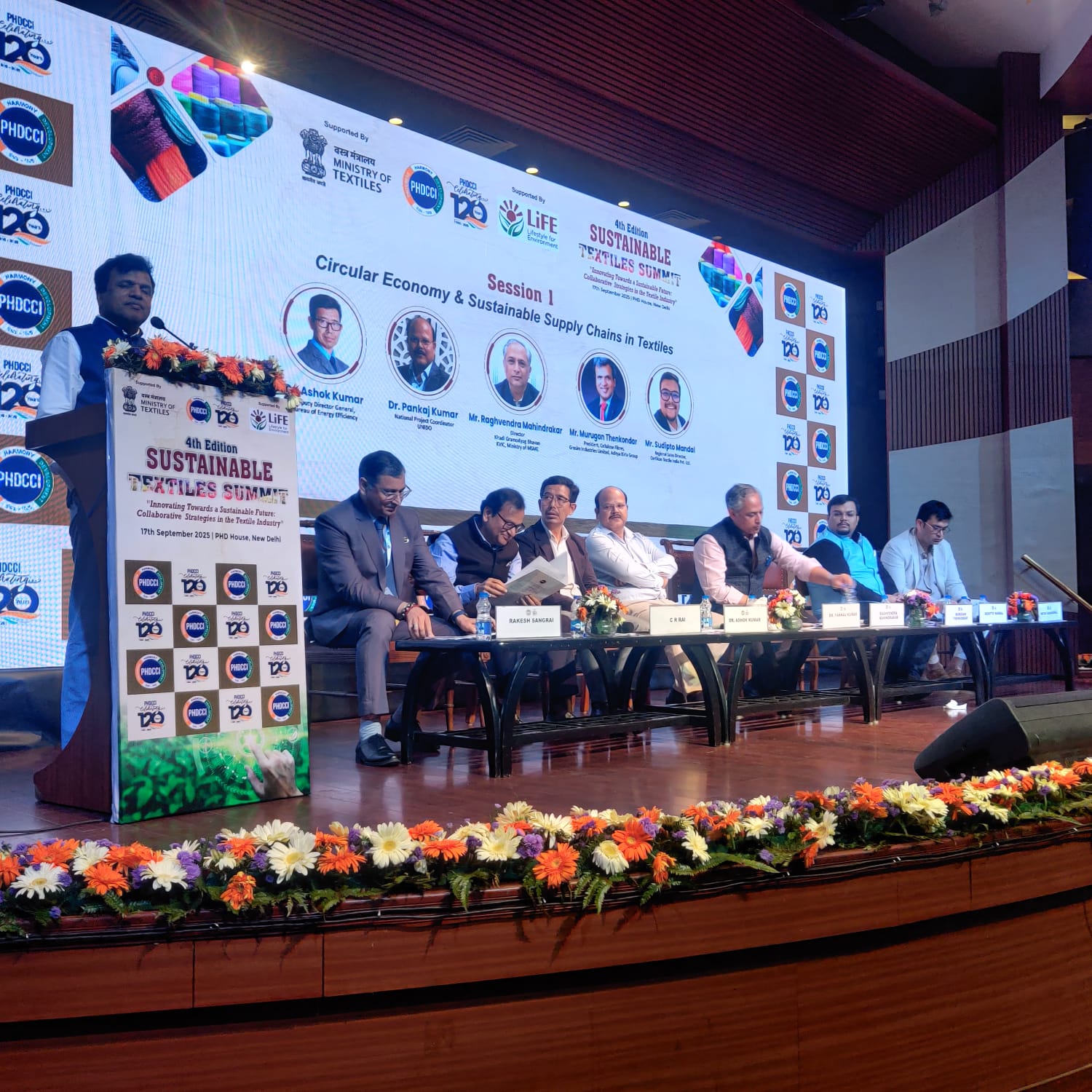
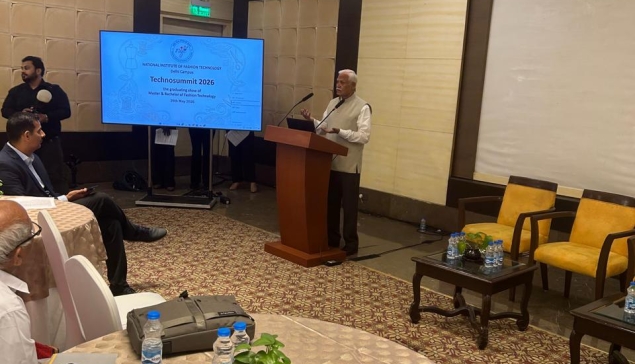
Address by Murugan Thenkondar l President at Grasim Industries Limited Pulp & Fibre.
4th Edition Sustainable Textiles Summit 2025 | September 17, 2025
Compiled by: Salil Chawla, Director, DFU Publications.
I am Murugan from Grasim Industries, and I will briefly share our journey and commitment to sustainability.
When India gained independence on 15th August 1947, much of the cotton-growing land went to Pakistan following the partition. At that time, Mahatma Gandhi asked Shri J.D. Birla, a close associate, how India would overcome this cotton scarcity.
Just ten days after independence, on 20th August 1947, Shri Birla founded Grasim Industries to produce man-made fibers as an alternative to cotton. This was not just an industrial venture but a nation-building initiative aligned with India’s self-reliance vision.
Defining Sustainability
Sustainability, as the UK government defines it, is meeting the needs of the present without compromising the ability of future generations to meet their own needs. It is simple in concept yet profound in application.
Today, urbanization, traffic congestion, and environmental degradation show us the cost of unchecked development. Sustainability is not a choice anymore—it is a necessity for survival and growth.
Grasim’s Sustainability Commitments
At Grasim, we produce viscose fiber using wood pulp sourced from FSC-certified managed forests. Trees are harvested after 10–12 years and replanted to maintain the carbon-oxygen balance, ensuring an eco-positive cycle.
Our operations follow European Union Best Available Technologies (E-E-BAT) standards to minimize chemical usage and emissions. We have eliminated hazardous substances such as formaldehyde and phosphates from our processes and adopted Zero Discharge Guidelines (ZDG) to protect water resources.
We have pledged to achieve Net Zero Carbon emissions by 2040, working across our supply chain—partners, customers, and suppliers—to drive meaningful change.
Sustainability Comes at a Cost
While sustainability requires investment, the mindset to support it is equally important. We cannot rely on policies alone—every individual must commit to responsible practices:
Use public transport where possible
Reduce water wastage
Support sustainable products like Khadi, one of India’s most eco-friendly fabrics
COVID-19 reminded us how fragile our systems are. Environmental crises can be even more disruptive if we fail to act now.
A Collective Responsibility
As a company, as a nation, and as individuals, we must embrace sustainability—not just in speeches or conferences but in everyday actions. I invite you all to review our sustainability initiatives and join this shared commitment for a greener, more resilient future.
If you want, I can turn this into a 3-minute powerful keynote speech or a one-page infographic highlighting Grasim’s sustainability vision. Which one would you prefer?


 CONTACT US
