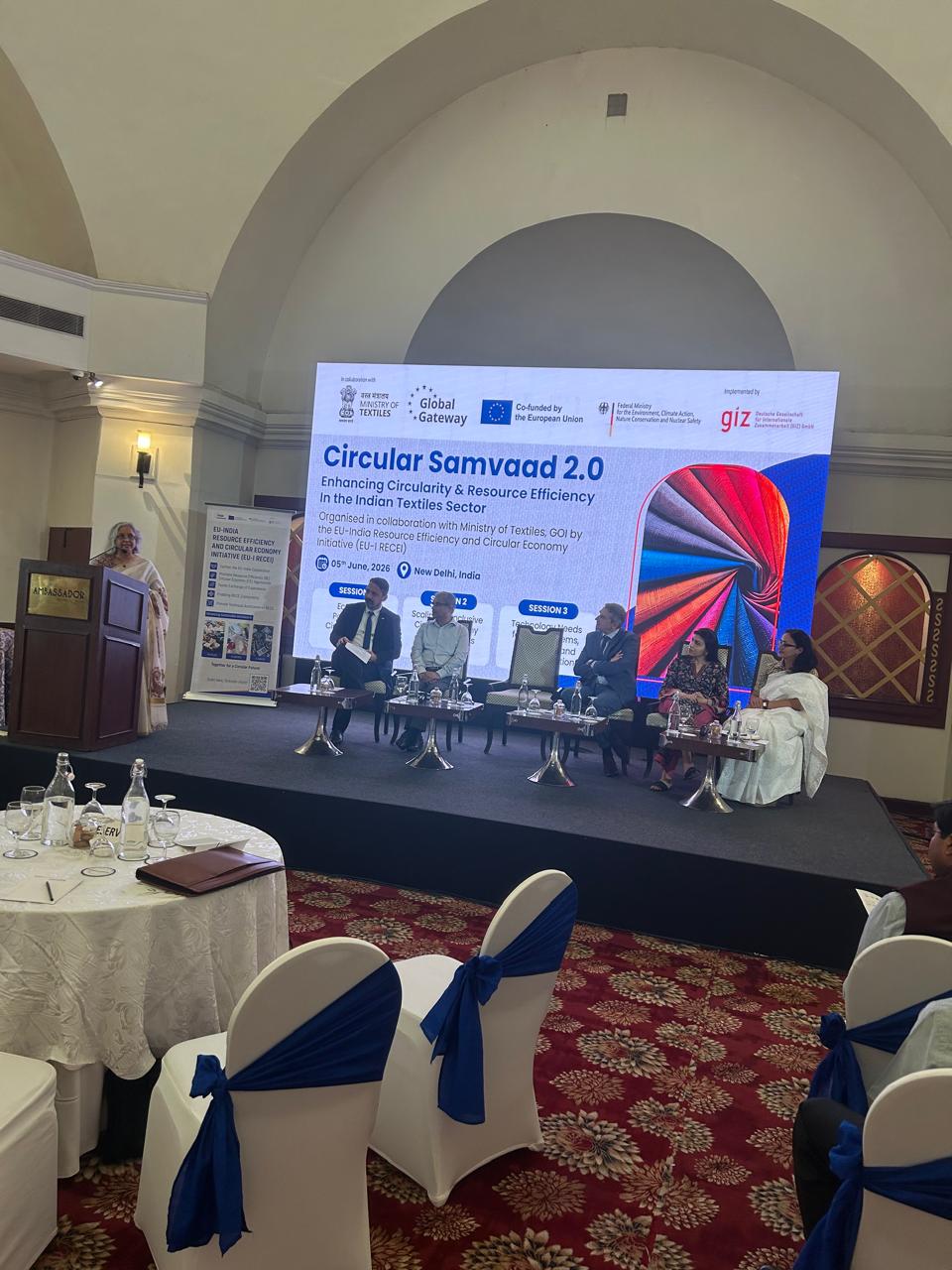
Excerpts from the Address by Ms. Neelam Shami Rao, Textile Secretary, Ministry of Textiles, Government of India, at Circularity Samvaad 2.0 – World Environment Day
The study I referred to earlier touched upon a reality that remains on the margins of most children’s lived experience. Yet, it is a reality we cannot ignore. We must – and I say this with full emphasis – address the challenge of textile waste. And we must act now.
What once seemed like a minor issue has grown phenomenally. This growth has been further documented through the dedicated work of our teams, who have carefully built upon security data from that very study, layer by layer. Our goal is to take this understanding and spread it across the world.
Over the past year, we have seen our youth rise to the occasion, taking up many new initiatives on their own. So I believe – and perhaps we should engage them directly – that we can arrive at meaningful conclusions. On my part, I will now focus more on the writing and documentation side of this effort.
When we spoke in the first edition of our book, we set the tone for the textiles sector and its necessary transition. We talked about sustainability. We attempted to collaborate, allowing information to move freely between our work and the industry.
Many times, we moved forward, only to find ourselves back at the starting point. We received everything we needed, but here is the crucial point: our team has long understood that we need institutionalised technology. The real question is how the “hand rules” – traditional practices and grassroots methods – vis-à-vis our modern challenges can actually become a pathway toward sustainable, and even more sustainable, operations.
This perspective emerged from a study we conducted. It revealed the need to work with certain kinds of people – those who have already lived through the very struggles you are now facing – by whatever means necessary. That was my own realisation when I entered this field.
I am fortunate to have many capable people here, and more are joining. I have been given similar opportunities in the past, along with five days of intensive work at a centre of excellence. Now, in this latest season, we will be able to bring more technology – or those “hand rules” – to everyone present. These methods will spread organically through the rules themselves. That, I believe, is the true power within your community.
Long ago, the conditions were set to model this technology. And the record states what you already know: this is our skill – the ability to create a genuinely good environment across generations. This industry has existed for more than five thousand years. It is time we honour that legacy by making it sustainable.


 CONTACT US
