

Unleashing Innovation: India's High-Quality Sock Revolution
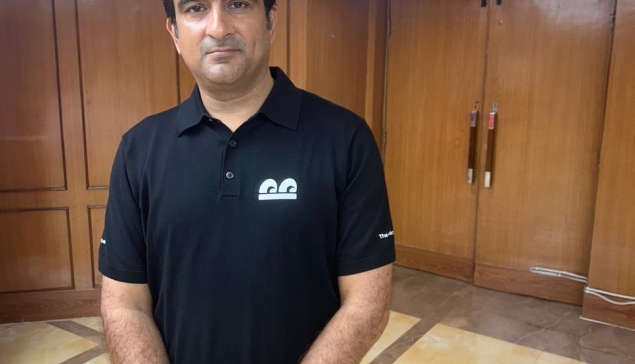
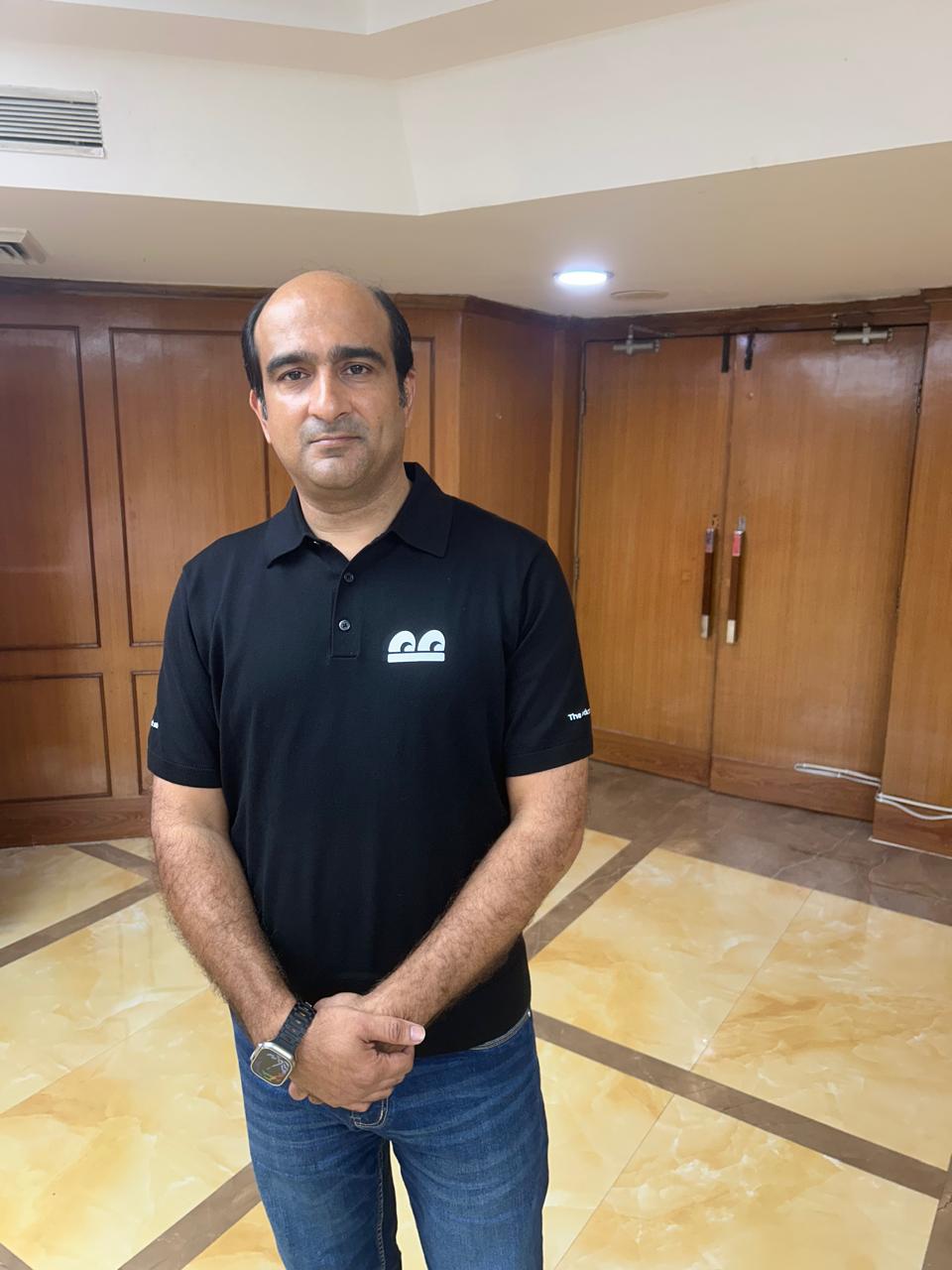
Salil Chawla, Director of DFU Publications, engaged in an insightful conversation with Udit Mayor, Co-Founder of Sock Street, during an exclusive press conference held earlier today. The event featured the official unveiling of Sock Street’s Brand Ambassador and the launch of the company’s innovative Compression Performance Socks.
Q. Please introduce yourself.
My name is Udit Mayor, and I am the Co-founder of Sock Street, a Gurugram-based premium socks brand focused on developing high-quality, performance-oriented and lifestyle socks for the Indian market. Our objective is to redefine socks as an essential performance and fashion product rather than treating them as a basic commodity.
Q. From both a technical and commercial perspective, how do you see the Indian socks industry evolving? Lifestyle trends, Gen Z consumers, fitness awareness and sports culture are creating new opportunities. What is your perspective?
The Indian socks industry is undergoing a significant transformation. Traditionally, socks were viewed as a low-involvement purchase, but consumer awareness is increasing rapidly. People are beginning to understand that different occasions require different types of socks, just as different activities require different footwear.
For example:
Formal business attire or wedding wear requires premium formal socks with subtle designs.
Casual denim pairs well with casual or ankle-length socks.
Sports shoes demand technically engineered sports socks that provide cushioning, breathability and moisture management.
Consumers are gradually recognising that one type of sock cannot serve every purpose.
A major catalyst has been the post-pandemic lifestyle shift. Since COVID-19, fitness has become an integral part of everyday life. Individuals who earlier led sedentary lifestyles have taken up walking, running, gym workouts and marathon participation. As physical activity increases, people also become conscious of comfort, injury prevention and performance.
Recognising this trend, Sock Street expanded beyond casual and fashion socks into technical sports socks and recently introduced compression socks, developed in collaboration with Indian wrestler Sangram Singh. Compression socks are specifically designed to improve circulation, support calf muscles and reduce fatigue during sports and prolonged physical activity.
The sports category has emerged as our fastest-growing segment, clearly indicating that Indian consumers are increasingly willing to invest in functional, performance-based products.
Q. How do you differentiate Sock Street from the largely unorganised Indian socks market?
The Indian socks market is estimated to be worth approximately ₹5,500–10,000 crore, although exact estimates vary across industry sources. However, only about 10–15% of this market is organised. The remaining share comprises unorganised domestic manufacturers and imported products, many of which do not consistently adhere to recognised quality standards.
Our philosophy has always been quality-first.
We begin by sourcing yarn only from reputed Indian spinning mills. Before any product enters commercial production, it undergoes multiple stages of testing.
These include:
Laboratory testing for fibre composition
Colour fastness
Shrinkage control
Rubbing and wash performance
Lycra recovery and dimensional stability
Only after satisfactory laboratory reports do we proceed to pilot production.
Even then, we conduct extensive wear trials. Prototype samples are worn repeatedly, washed multiple times and evaluated over several weeks to assess durability, comfort, elasticity and overall performance. Only after successfully completing this research and development process do we commence bulk production.
Q. What are the key technical features of your sports socks?
Our sports socks are engineered with several premium features that enhance user comfort.
One of our biggest differentiators is seamless toe construction. Unlike conventional socks stitched using Rosso linking machines, our seamless construction eliminates the bulky toe seam, significantly reducing irritation and friction during prolonged use.
In addition:
Every product is pre-washed before packing.
Pre-washing controls post-purchase shrinkage caused by Lycra recovery.
We incorporate cushioning in high-impact zones.
Our products offer superior comfort and durability.
These additional processes increase manufacturing costs but also substantially improve product quality and longevity.
The response from customers has been extremely encouraging. Our products have consistently received high ratings across online marketplaces, with customers appreciating comfort, durability and performance. More importantly, we see strong repeat purchases, which is the best indicator of customer satisfaction.
Q. Tell us about the development of your compression socks.
Compression socks required a completely different level of research and development.
We spent several months optimising:
Compression levels
Stretch and recovery
Grip
Fabric construction
Several prototypes were rejected before arriving at the final design.
To validate the product scientifically, we shared samples with orthopaedic specialists, who further recommended them to patients requiring muscle support and recovery assistance.
The feedback was overwhelmingly positive. Medical professionals appreciated both the comfort and effectiveness of the product and even expressed interest in recommending it to their patients. That gave us confidence that we had successfully developed a technically sound compression sock.
Building on this success, our next product category will be health socks, aimed at consumers seeking enhanced foot comfort and wellness.
Q. India is aggressively promoting textile exports. From your experience, how prepared is the Indian socks industry to compete globally?
India certainly possesses the capability to manufacture high-quality socks that meet international standards. However, scaling exports remains a challenge.
Global buyers today demand:
Consistent quality
Competitive pricing
Large production capacities
Short delivery timelines
China continues to dominate largely because of its integrated manufacturing ecosystem.
For instance, in China, yarn procurement may take less than a week, whereas in India, sourcing specialised yarn often requires 45–50 days. If raw materials themselves take that long to arrive, meeting international delivery schedules becomes extremely difficult.
Another challenge is manufacturing scale.
Many Indian factories operate with 20–30 knitting machines. Even facilities with over 100 machines must simultaneously serve both domestic and export markets. Only a limited number of manufacturers possess capacities exceeding 200–300 machines.
Large international buyers generally prefer suppliers capable of handling substantial volumes under one roof, which naturally favours larger manufacturing ecosystems.
However, for smaller export consignments and specialised orders, India is well positioned. With proper quality systems, Indian manufacturers can certainly compete in premium market segments.
Q. Do you believe collaborations or joint ventures are necessary to bridge technology and scale gaps?
Collaboration can certainly accelerate growth.
The world’s most advanced sock knitting machines are manufactured in Italy, but they involve significantly higher capital investment. Chinese machines today are capable of producing products that are very close in quality for a fraction of the cost, making them commercially viable for many manufacturers.
Strategic collaborations or joint ventures can help Indian companies:
Expand manufacturing capacity
Invest in advanced technology
Improve productivity
Achieve economies of scale
Serve larger export markets
With stronger industry partnerships and greater investment, India can significantly enhance its competitiveness in the global socks industry.
Q. Finally, what message would you like to give to the Indian socks industry?
The biggest opportunity lies in educating consumers.
Many people still consider socks to be an inexpensive accessory and often prioritise price over quality. However, socks remain in direct contact with the skin for extended periods and therefore deserve the same attention as footwear.
Consumers should choose socks appropriate for the occasion and activity while also considering comfort, hygiene and durability.
At Sock Street, every product undergoes antibacterial treatment to minimise odour and improve hygiene. Premium-quality socks not only enhance comfort but also help protect expensive footwear by improving moisture management and reducing bacterial growth.
As consumer awareness continues to grow, we believe the Indian market will steadily shift towards higher-quality, technically engineered socks. The future belongs to brands that combine innovation, quality, performance and consumer education.

 CONTACT US
