




Polyester and India’s Rising Activewear Opportunity: A Transformational Growth Story
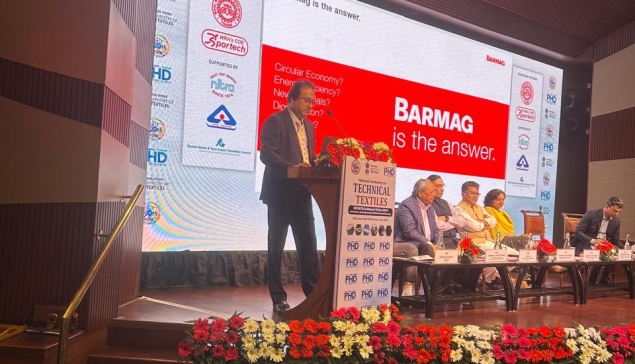
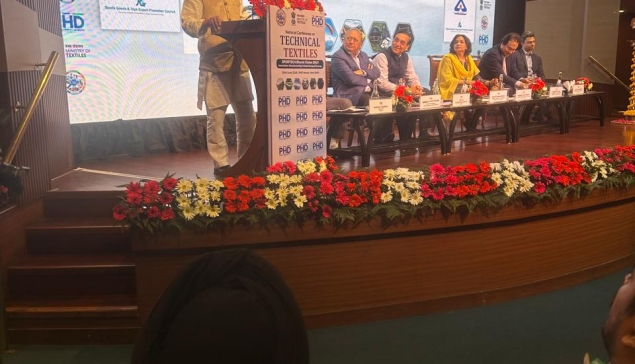
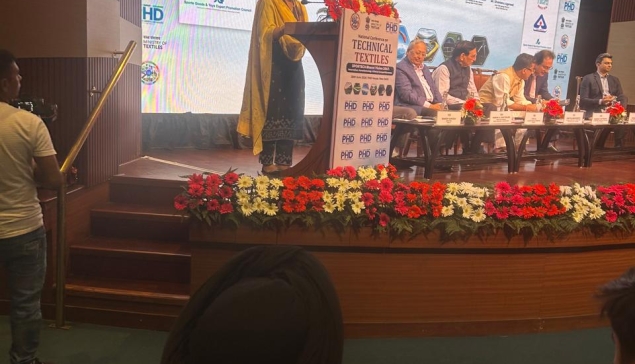
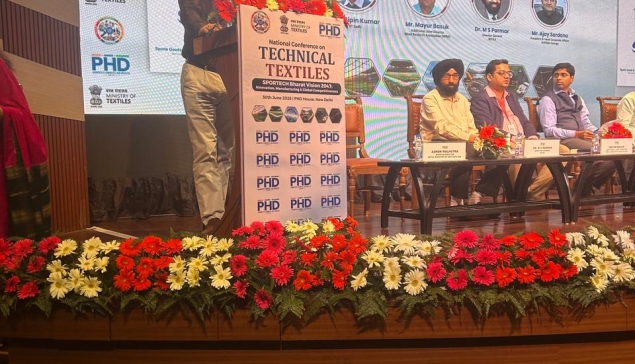
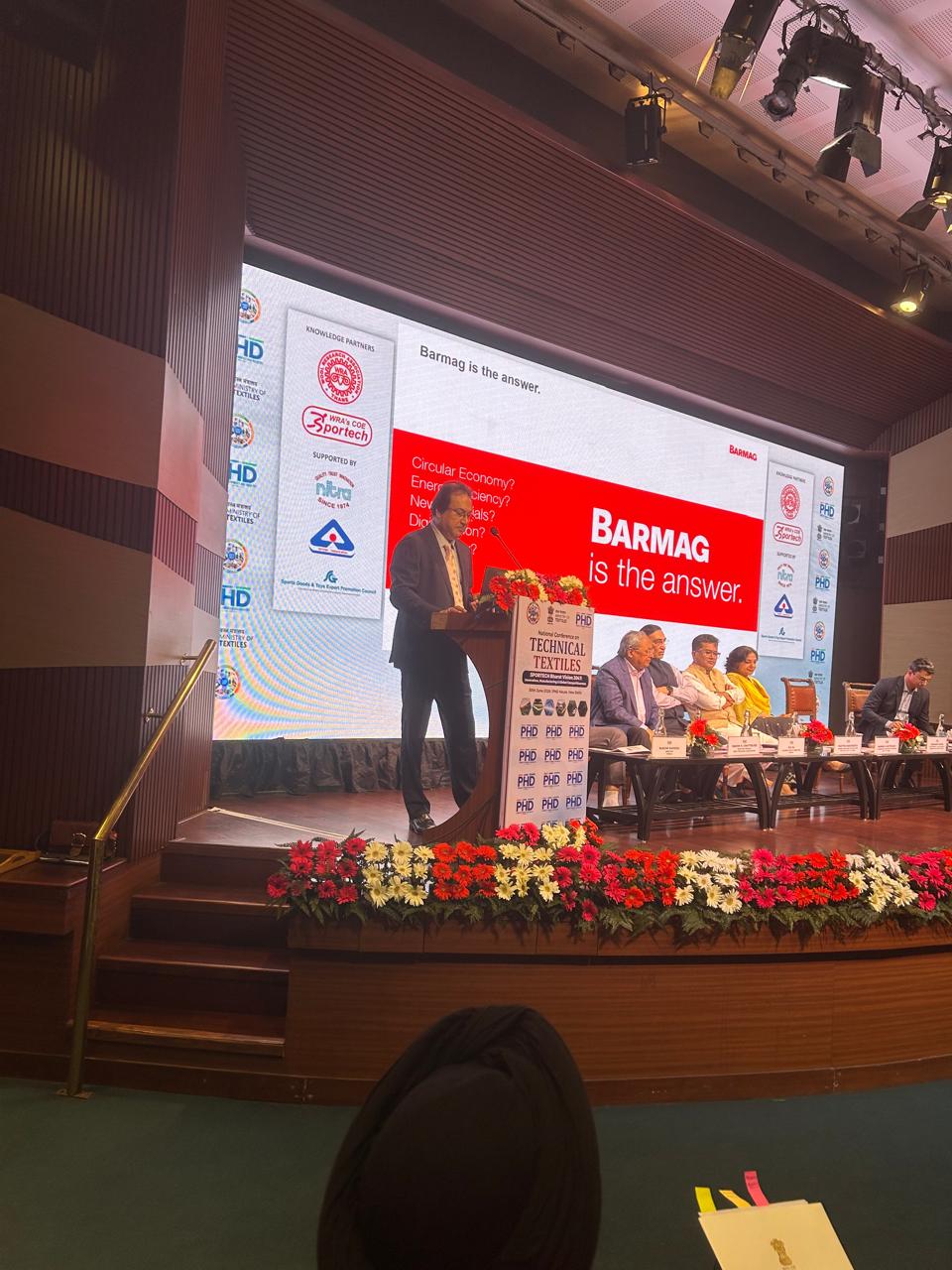
As covered by Salil,Chawla, Director DFU Publications in the cpcity of delegte tody "National Conference on Technical Textiles" organised by PHDCCI. The excerpts of Debarata Ghosh, VP & Sales Dir., Barmag India.
Polyester continues to dominate the global fibre market and remains the backbone of the global activewear and sportswear industry. In 2024, polyester accounted for nearly 60% of total global fibre production, reaffirming its position as the world’s most widely used textile fibre.
Within total polyester production, recycled polyester represented only about 12% in 2024, while the remaining 88% continued to come from virgin polyester. Although sustainability initiatives are accelerating the adoption of recycled fibres, virgin polyester remains the primary raw material due to its availability, cost competitiveness, and performance characteristics.
Activewear: One of the Fastest-Growing Textile Segments
Among all apparel categories, activewear and sportswear have emerged as one of the strongest global growth drivers. Changing lifestyles, increasing health consciousness, greater participation in fitness activities, athleisure fashion, and rising disposable incomes are reshaping consumer preferences worldwide.
India is also witnessing the emergence of this powerful trend. The country’s activewear market is being driven by demographic advantages, rapid urbanisation, digital commerce, and evolving consumer behaviour.
India and China: Different Growth Stories, Not Direct Competitors
When comparing India and China, it is important to understand that the two countries are not in direct competition in the activewear segment. Their market dynamics, manufacturing strategies, export focus, and long-term policies differ considerably.
China continues to dominate global polyester production with manufacturing capacity nearly ten times larger than India’s. Consequently, its activewear market is substantially bigger.
In 2022, India’s activewear market was valued at approximately US$345 million, representing roughly 10% of China’s market, which is consistent with China’s significantly larger polyester production base.
By 2025, India’s market is estimated to reach around US$533 million, while China’s market is expected to be approximately US$3.8 billion.
Strong Growth Outlook Until 2035
To understand future opportunities, an international market research study conducted by BMEC, Germany, projected market growth through 2035.
According to these projections:
* India’s activewear market is expected to grow at a compound annual growth rate (CAGR) of approximately 10.5% between 2026 and 2035.
* During the same period, China is expected to grow at around 6.4% CAGR.
This difference is significant.
Many conventional apparel categories have already entered relatively mature growth phases. However, activewear—particularly garments manufactured using polyester filament yarns and textured filament yarns (DTY)—continues to enjoy exceptional growth potential.
By 2035, India’s activewear market is projected to reach approximately US$1.5 billion, while China’s market is expected to expand to nearly US$7.2 billion.
Although China’s market will remain much larger in absolute terms, India’s growth rate is expected to be considerably higher.
Why India Will Grow Faster
Several structural factors support India’s stronger growth trajectory:
* India has one of the world’s youngest populations.
* Rising health awareness is increasing demand for fitness apparel.
* Lifestyle changes are driving greater adoption of sportswear and athleisure.
* Higher disposable incomes and expanding e-commerce platforms are making activewear more accessible.
* Consumers increasingly prefer functional, performance-oriented clothing for both exercise and everyday wear.
In contrast, China’s activewear market is gradually approaching structural maturity. While it will continue growing, several factors are moderating its expansion:
* Market saturation in many product categories.
* Excess manufacturing capacity.
* Demographic transition towards an ageing population.
* Increasing price competition.
* Slower consumption growth compared to earlier decades.
India’s Opportunity Lies in Specialisation
India’s competitive advantage is not based on competing head-to-head with China in large-volume commodity production.
Instead, India’s strength lies in developing speciality products, innovation, value-added manufacturing, flexibility, and quality-focused production.
Global sourcing strategies are also evolving. International buyers, particularly in Europe, are increasingly adopting a “China Plus One” strategy, diversifying sourcing beyond China.
This creates significant opportunities for Indian manufacturers supplying specialised activewear fabrics, performance textiles, technical materials, and premium garments.
Local Brands Are Becoming Powerful Market Drivers
While global brands such as Nike, Adidas, Lululemon, Puma, New Balance, and Under Armour enjoy strong international recognition, they account for only a portion of the total activewear market.
Across North America, Europe, and the Asia-Pacific region, approximately 80–82% of the market consists of numerous regional and local brands.
This highlights an important industry reality: local brands collectively command a much larger market share than a handful of multinational brands.
India is witnessing a similar trend.
Several domestic activewear brands—including Technosport, Performax, HRX, Cultsport, Silvertraq, ASICS India operations, and numerous emerging digital-first brands—are rapidly expanding through e-commerce platforms and organised retail.
Many entrepreneurial brands are successfully serving niche consumer segments with innovative products and competitive pricing. These Indian brands are expected to play a major role in the future growth of the country’s activewear ecosystem.
Role of the Polyester Industry
As demand for activewear accelerates, the polyester value chain will become an increasingly critical enabler of industry growth.
From polymer production to filament yarns, draw textured yarn (DTY), functional fibres, moisture-management fabrics, stretch materials, and recycled polyester solutions, the polyester industry will remain a vital supplier to the expanding activewear sector.
Supporting innovation, sustainability, performance enhancement, and high-quality raw materials will be essential for meeting future market requirements.
India’s combination of favourable demographics, expanding domestic demand, increasing manufacturing capabilities, and global sourcing diversification positions the country to become one of the fastest-growing activewear markets over the coming decade. For the polyester industry, this represents not only a significant commercial opportunity but also a strategic avenue for long-term value creation.


 CONTACT US
