









TEXPROCIL Webinar: UK Home Textile - 12th June, 2026
Key Speaker
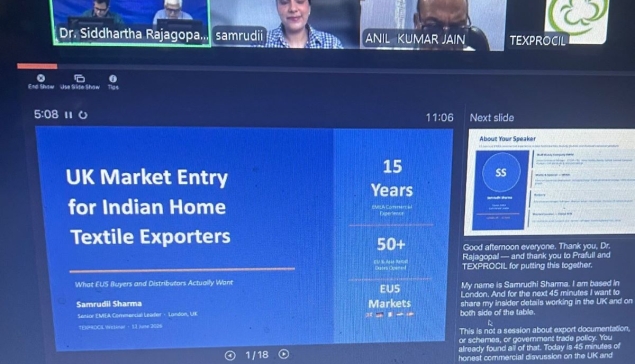
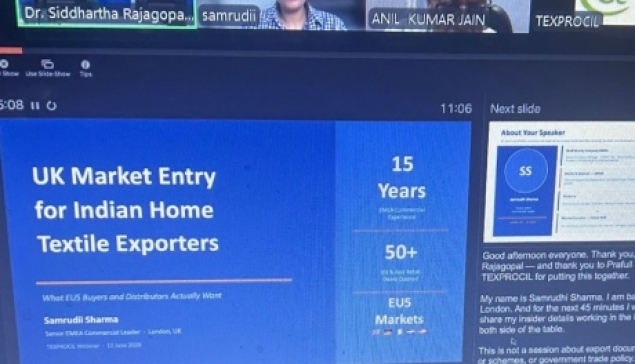
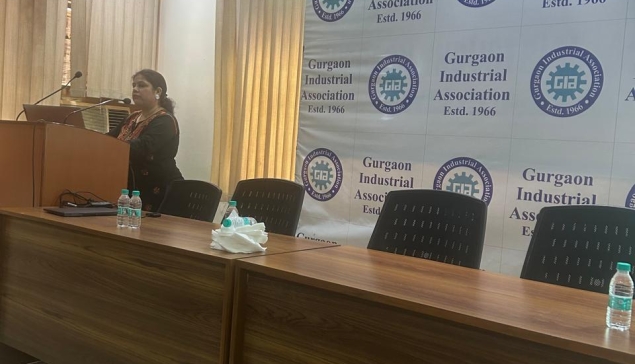
Ms. Samrudii Sharma, a senior EMEA (Europe, Middle East and Africa) commercial leader with over 15 years of experience managing retail and distribution partnerships across the United Kingdom, Germany, France, Italy, Spain, the Middle East, and North Africa delivered a very impressive presentation sharing actionable and measurable guides and insights. Very, very brief.
Excerpts
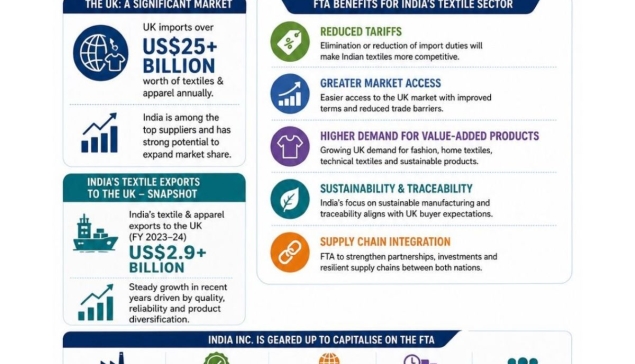
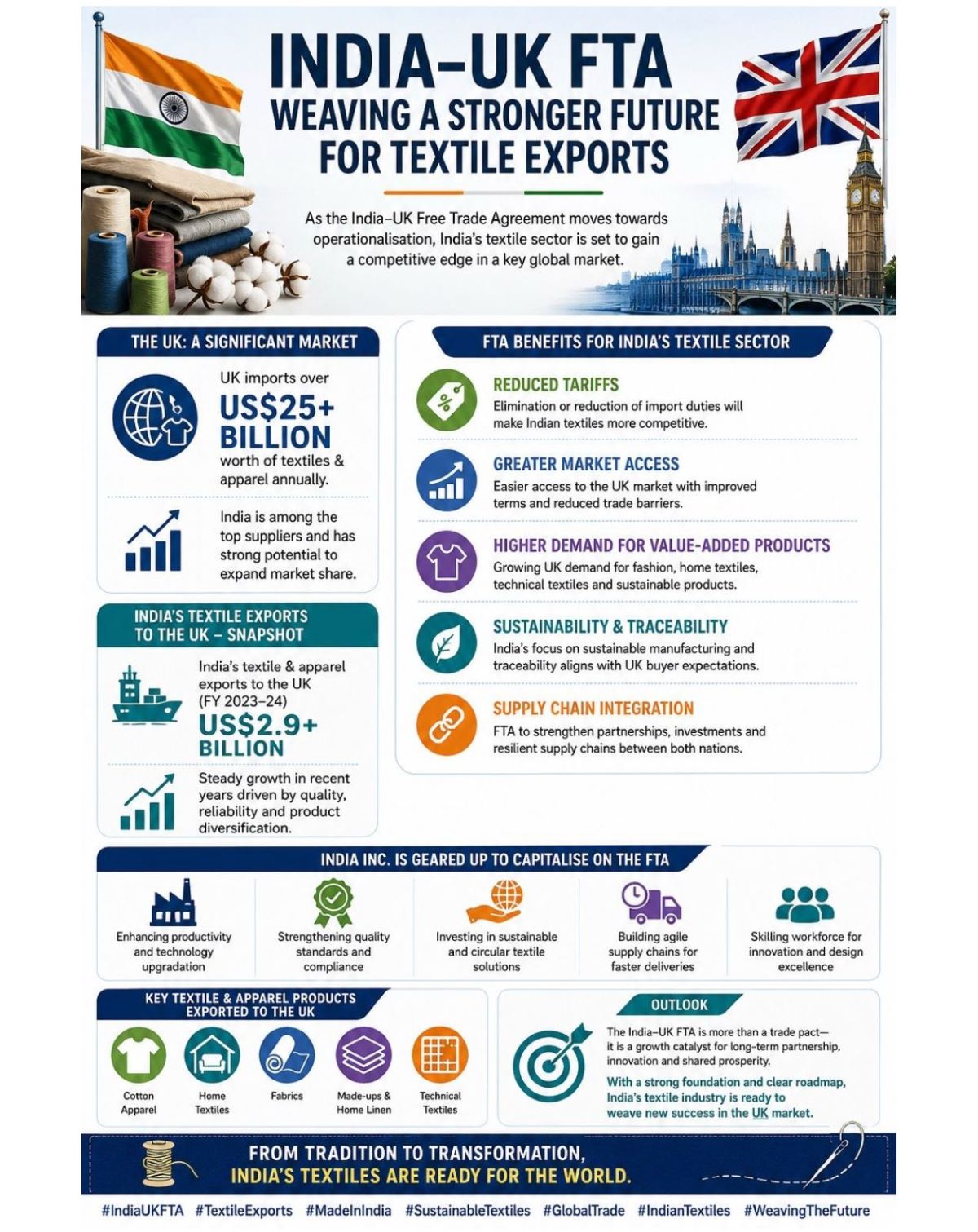
As India prepares to capitalize on the opportunities emerging from the India–UK Free Trade Agreement (FTA), the textile industry faces a critical reality: tariff advantages alone will not guarantee export success. The real challenge lies in understanding how UK and European buyers make sourcing decisions.
Industry experts with extensive experience across European retail markets emphasize that while duty barriers are gradually disappearing, commercial barriers remain firmly in place. The UK’s textile import market, valued at over US$23 billion annually, is now becoming more accessible to Indian suppliers, creating a more level playing field with competitors such as Bangladesh, Turkey, and China.Europe’s textile and home furnishing market remains one of the world’s largest sourcing destinations, with a significant share already supplied by developing countries.
At the same time, Bangladesh’s graduation from Least Developed Country (LDC) status in 2026 is expected to reduce some of the preferential advantages it has historically enjoyed, opening a strategic window for Indian exporters.
However, Europe cannot be treated as a single market.
Take a listen
The UK, Germany, France, Italy, and other European economies operate with distinct buying cultures, sourcing cycles, compliance requirements, and consumer preferences. Success therefore demands market-specific strategies rather than a one-size-fits-all export approach.
Trade fairs continue to be the most effective route for engaging buyers, followed by buying agents, digital sourcing platforms, and direct outreach. More importantly, buyers increasingly evaluate suppliers on operational discipline, responsiveness, quality consistency, sampling efficiency, and ease of doing business.
The message for Indian exporters is clear: the next phase of growth will be driven not merely by competitive pricing but by reliability, compliance, sustainability, product innovation, and a deep understanding of buyer expectations.
As the FTA opens new doors, India’s textile industry has a unique opportunity to convert market access into long-term commercial partnerships across the UK and Europe.
CREDITS: Content recorded by Salil Chawla, Director, DFU Publication, in his capacity as a delegate/participant. The content has not been edited and reviewed by us.



 CONTACT US
