

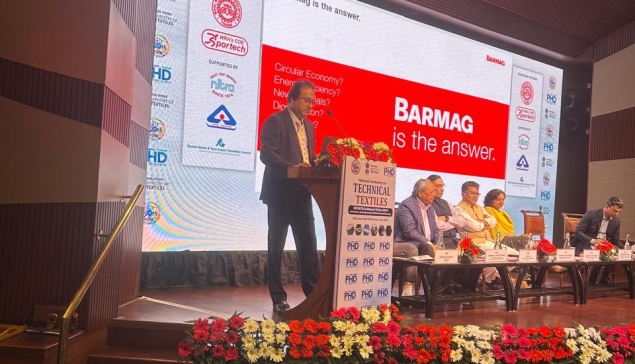
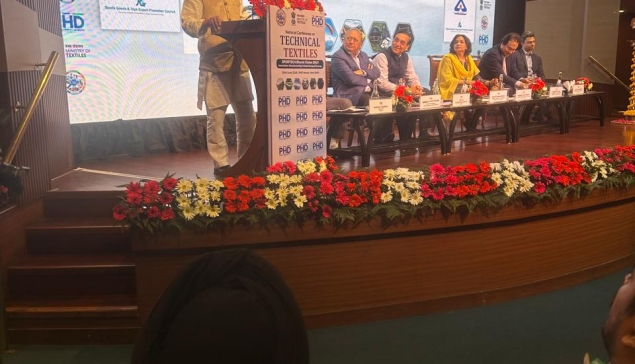
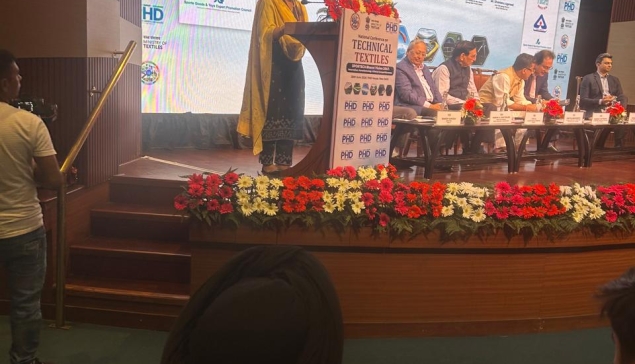
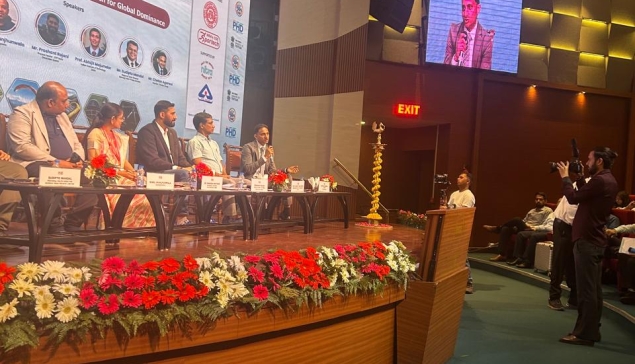
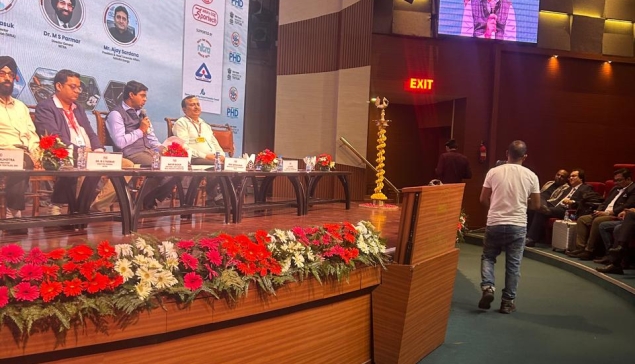


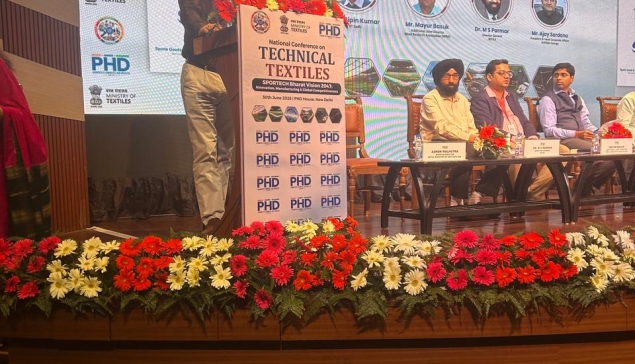


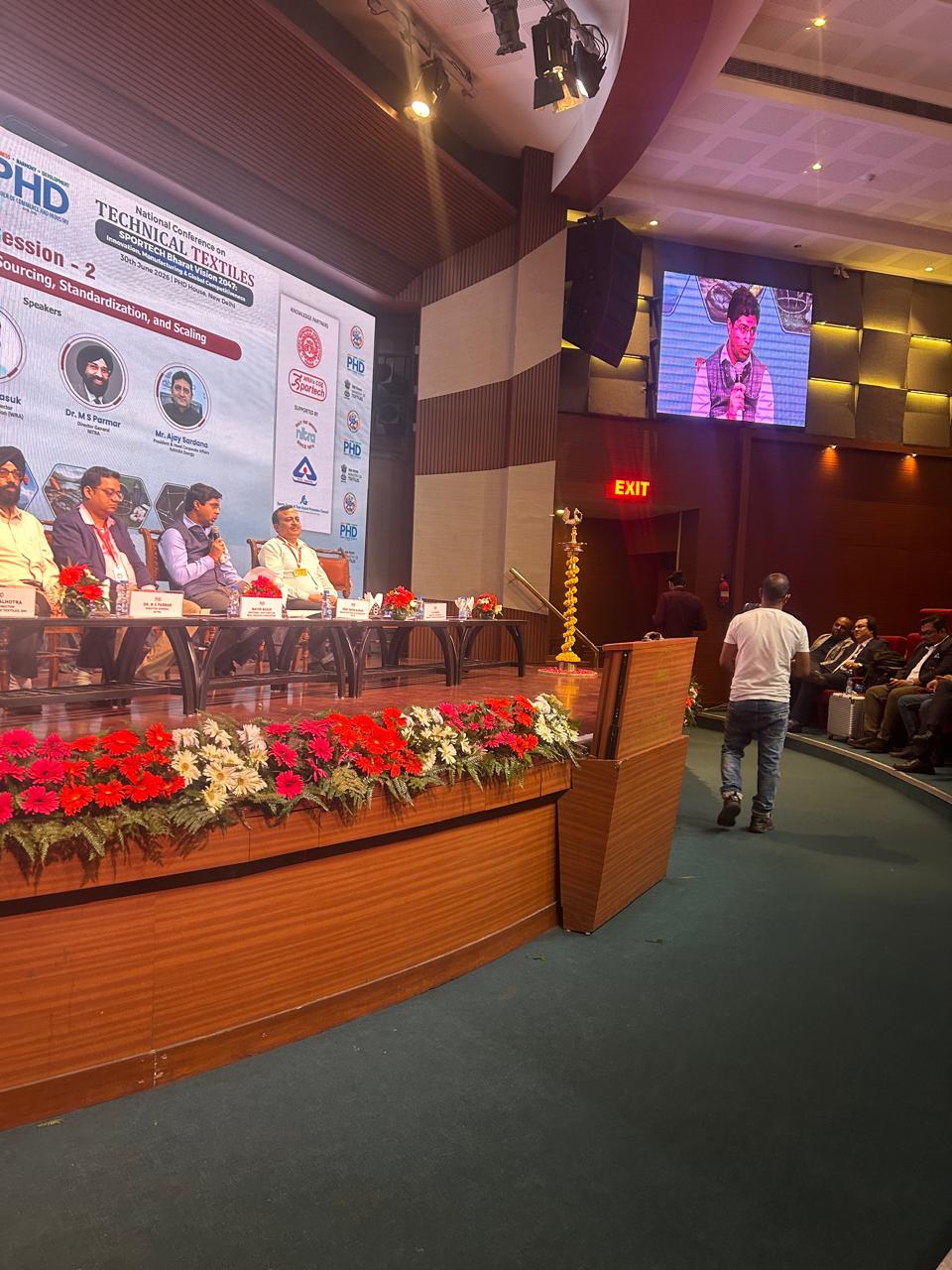
As covered by Salil,Chawla, Director DFU Publications in the capacity of delegate on 30th June, 2026 "National Conference on Technical Textiles" organised by PHDCCI. Excerpts from Bipin Kumar, Associate Professor in The Department of Textile Technology at IIT Delhi, address during one of the panel discussions:
Address at the National Conference on Technical Textiles
How Can Advanced Textile Research Redefine Sports Performance? The Role of Academic Institutions in Bridging Laboratory Innovation and Commercial Sports Products
At the outset, I would like to thank Dr. Manisha, the PHD Chamber of Commerce and Industry (PHDCCI), and WRA for inviting me and giving me this opportunity to share my thoughts.
Interestingly, this event places me in a dilemma. We are gathered at a research- and academia-centric conference, yet we are discussing sports. For decades, in Indian society, sports and academics were often viewed as opposites. Since childhood, many of us grew up hearing, “Mera beta sirf khelta hai, kabhi padhai nahi karta.” The perception was simple: if you studied, you should not play; if you played, you could not excel academically.
Fortunately, that mindset has changed dramatically. India today gives unprecedented importance to sports, and that cultural transformation is one of our biggest strengths.
I vividly remember my school days when I was a passionate cricket enthusiast. I also remember the disappointment of India’s Olympic performances. At the 1984 Los Angeles Olympics, India failed to win a single medal. The same happened at the 1988 Seoul Olympics. In 1992 Barcelona, our hopes rested on athletes like P.T. Usha, yet India again finished without a medal. Three consecutive Olympic Games without a medal represented a significant psychological barrier for the nation.
Take a view
The breakthrough finally came in 1996, when Leander Paes won the bronze medal in tennis. Coincidentally, I was pursuing my studies at IIT during that period, and we celebrated that achievement with immense pride.
Today, the situation is entirely different. India is preparing its bid to host the 2036 Olympic Games. As a nation, we have gained confidence in our technological capabilities, sporting ecosystem, and organisational strength. Although at the 2024 Paris Olympics India still has significant ground to cover in the global medal tally, I firmly believe that as sports increasingly integrate with science, engineering and technology, India’s future in international sports is extremely promising.
Before discussing technical innovations, it is important to recognise how dramatically our sporting ecosystem has evolved. Twenty years ago, Indian sports fans primarily followed international leagues such as the English Premier League, the Italian football league and the NBA. Today, we have the Indian Premier League (IPL), arguably the world’s most influential cricket league, where the best cricketers across the globe aspire to participate. This reflects how India’s sporting culture, commercial ecosystem and global standing have transformed.
When we discuss sports, we should not restrict ourselves to sports apparel alone. At IIT Delhi, we are looking at sports science and technology as an interdisciplinary academic domain.
While some institutions, such as IIT Madras, have initiated programmes in this area, IIT Delhi is now actively exploring formal academic programmes dedicated to sports science and technology.
To build this ecosystem, we have established collaborations with leading international universities. We have signed MoUs with the University of Exeter, UK, one of the world’s leading institutions in sports science, and with the University of Queensland, Australia, another globally recognised university with strong expertise in sports technology.
Our vision is to develop a comprehensive curriculum covering five major verticals:
Sports biomechanics
Wearable technologies and sensors
Sports textiles and clothing
Sports branding and marketing
Artificial Intelligence and data analytics for sports
Sports clothing is therefore only one, albeit an important, pillar of the broader sports science ecosystem.
Coming specifically to sports textiles, many distinguished speakers today—including Mr. Ghosh, Prashant Ji and Jhunjhunwala Ji—have already emphasised the importance of fibre engineering. I completely agree.
In sports apparel, garment design, aesthetics, ergonomics and comfort are undoubtedly important. However, true innovation begins at the fibre level—the fundamental building block of every textile. Unless India develops strong capabilities in advanced fibre engineering, we will continue to remain followers rather than global technology leaders.
Around fifteen years ago, when I initiated research on UV-protective clothing, I searched extensively for Indian manufacturers capable of supplying inherently UV-protective fibres. Unfortunately, I could not find a single domestic supplier. Such fibres were available from Chinese manufacturers, but not within India. This highlighted a significant technology gap.
If we analyse high-performance sports apparel, several fibre properties become essential.
The first is moisture management. During high-intensity sports such as marathons, sprinting and decathlon events, athletes generate substantial perspiration. That moisture must be transported rapidly away from the skin and evaporated efficiently to maintain thermal comfort and performance.
Achieving this requires fibre-level engineering. Conventional synthetic fibres generally possess circular cross-sections, which generate relatively low capillary pressure. As a result, moisture transport is limited. By engineering fibres with multiple longitudinal channels and specialised cross-sectional geometries, capillary action increases significantly, allowing sweat to move rapidly from the skin to the outer surface where it can evaporate.
The second important property is antibacterial functionality.
While antibacterial finishes can be applied during textile processing, their effectiveness generally decreases after repeated laundering. Standard tests, such as those based on AATCC protocols, clearly demonstrate this reduction in performance after multiple wash cycles.
A more durable solution is to incorporate antimicrobial agents, such as nanosilver, directly into the polymer during fibre spinning. This enables long-lasting antibacterial performance throughout the life of the garment.
I am pleased to share that under the National Technical Textiles Mission (NTTM), we have received a project worth approximately ₹10 crore to develop durable moisture-management and antibacterial polyester fibres specifically designed for sports textiles. Our objective is to create polyester fibres whose moisture-management and antibacterial properties remain effective regardless of repeated washing.
The third important characteristic is UV protection.
Although this may sometimes receive less attention in India due to relatively higher natural melanin levels in our population, UV protection remains an important functional requirement, particularly for athletes participating in prolonged outdoor sports. Cases of skin cancer among international cricketers, particularly from countries like Australia, highlight why UV-protective sports apparel is increasingly becoming an essential performance and health requirement.


 CONTACT US
