






Impact of India's Import Restrictions on Bangladeshi Garments

Impact of India's Import Restrictions on Bangladeshi Garments
Extended Delivery Times and Increased Costs
India's decision to limit finished clothing imports from Bangladesh through land borders may lead to longer delivery times and higher shipping costs. This change could significantly impact Bangladeshi garment exports to India.

Challenges for Indian Buyers
Longer transit times due to mandatory sea route
Difficulty switching to alternative suppliers due to Bangladesh's cost advantage
Loss of benefits from lower manufacturing costs and subsidized electricity in Bangladesh.

TrumpTariffs

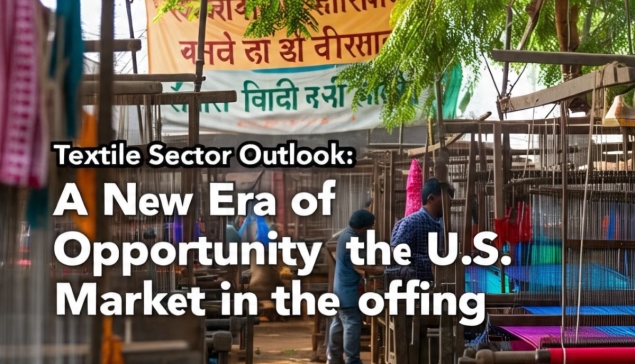
India’s Textile Sector Outlook: A New Era of Opportunity in the U.S. Market in the offing 

1. Mutual Tariff Reductions with the U.S.: A Realistic Possibility 
What’s Changing: If the U.S. reciprocates India’s zero or reduced tariffs, as lately ‘shouted from rooftops’ by the Trump administration, offering similar access for Indian textile exports, it marks a major shift in bilateral trade dynamics.
Current U.S. import duties on Indian apparel (up to 32%) are a competitive disadvantage.
Reduced or eliminated tariffs would significantly boost the price competitiveness of Indian garments, home textiles, and MMF-based products.

BLOSSOMPREMIÈREVISION

BLOSSOM PREMIÈRE VISION RETURNS IN JUNE AGAINST A STRATEGIC BACKDROP FOR THE LUXURY SECTOR.

The luxury goods market has been experiencing a slowdown since last year, affecting a sector that has been particularly spared by crises until now and prompting luxury houses to rethink their strategy at a time of major change for the fashion industry as a whole.

Against this backdrop, Blossom Première Vision, the exclusive event dedicated to the pre-collections of luxury and premium fashion brands, has chosen to reposition its edition in June for the first time since 2020, to better respond to the challenges and needs of the luxury industry, for which pre-collections remain more than ever a strategic lever.

Wool prices shot up

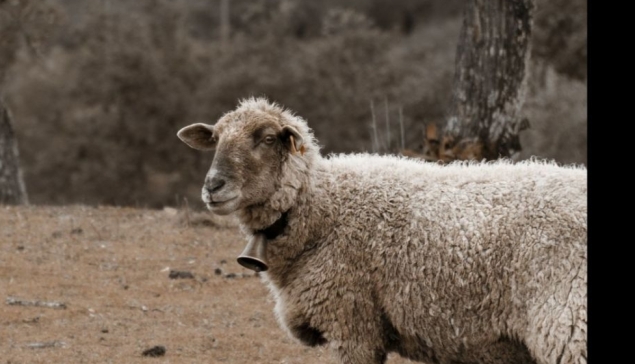
Wool returns received by British Wool’s members are at the highest level since 2018. This has been driven by strong demand from buyers over the course of the last year, with auction prices in March hitting levels not seen since October 2018.Commenting on the trends, Jim Robertson, Chairman of British Wool, says, “With an average auction price of £1.00 per kg, British Wool’s sale price is 18p per kg higher than last year.

Coupled with strong cost control, this price increase has flowed through to improved member returns.”

More about: ,
IndoUKFTA

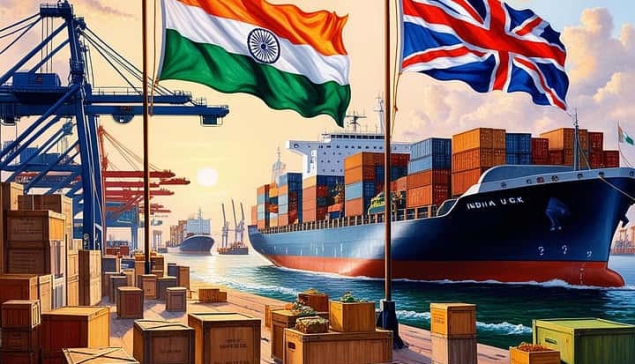
The timing of the FTA is of the essence, given that it was an opportunity waiting to happen for a long time and has the potential to give India's textile exports a shot in the arm, considering the challenging global business environment.

Against this backdrop, the India-UK FTA assumes great significance given that Trump's tariff tantrums have upended the global economy, forcing IMF/World agencies to revise global trade downward. 
The recent rise of India, especially in the post-pandemic world, has ushered in a new era of geopolitics, offering a once-in-a-lifetime opportunity for the Indian economy. 

StartUPs

The Indian textile industry is at a rare inflection point. With global supply chains gradually shifting from China to India, there’s a tremendous opportunity for Indian textile startups to lead a new era of innovation, sustainability, and scale.

India’s textile industry is massive - it contributes over 2% of GDP, supports 45 million jobs, and is poised to grow from $176 billion in 2024 to $350 billion by 2030. This isn’t just a legacy sector - it’s a high-potential space, especially when energized by tech-savvy startups. But there is a general perception among the old hands of the Indian textile industry that it has taken 2 steps forward and 1 step backward for decades!

NIGFDelhi2025

The Northern India Garment Fair (NIGF) 

Connecting Industry Professionals

Event Dates: 27-29th May, 2025

Venue: YASHOBHOOMI (India International Convention & Expo Centre), New Delhi 

Organisers: The Clothing Manufacturers Association of India (CMAI).

The NIGF provides a valuable opportunity for industry professionals to establish new commercial connections, promoting business growth and development in the garment industry.

Global Outreach Summit 2025

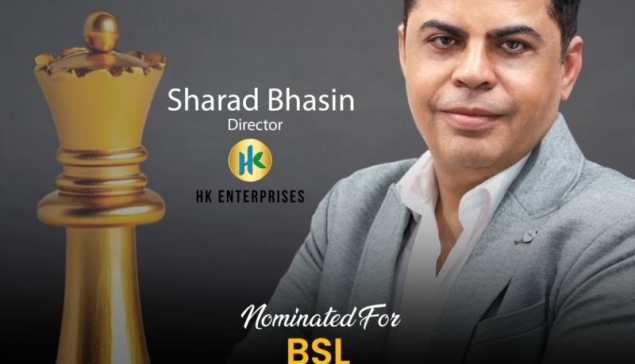
Sharad Bhasin, a Director at H.K. Enterprises, has received a prestigious nomination for the BSL 10 Best Sourcing Leaders of India award. This acknowledges Sharad's remarkable three decades of commitment to superior apparel sourcing and supply networks.

His forward-thinking approach, focus on quality and ethical practices, and influential guidance at HK Enterprises have distinguished him in the field.

This nomination celebrates his significant accomplishments and the inspiring direction he continues to provide to sourcing throughout India.

More about: , , ,
CemAltanIAF

The textile and apparel industry (T&A) is undergoing a fundamental shift, and this disruption is likely to become the ‘new normal.’ Several structural changes—geopolitical tensions, nearshoring, sustainability regulations, and digitalization—are reshaping trade and investment patterns.

Blockchain and digital product passports will facilitate traceability, helping companies comply with new regulations and differentiate products.
Investments in smart factories, 3D sampling, and automated sewing technology will accelerate, shifting cost advantages away from purely low-wage labor markets.

HKTDC

NEXT@Fashion InStyle becomes the new focus

The 2025 edition of Fashion InStyle sees the launch of NEXT@ Fashion InStyle (NEXT), a new highlighted zone organised by the HKTDC and sponsored by the Cultural and Creative Industries Development Agency (CCIDA) of the HKSAR Government. Thailand is the Strategic Partner of NEXT@Fashion InStyle, powered by the Thailand Creative Culture Agency (THACCA) and The National Soft Power Development Committee who have brought some 30 Thai exhibitors to showcase fashion materials that blend Thai culture with sustainability and innovative technologies.

SustainableFashion

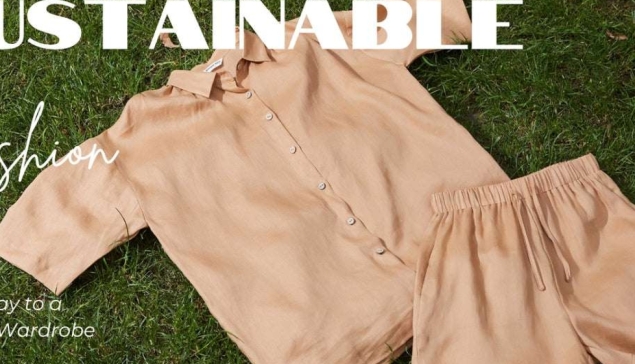
38% 𝐦𝐨𝐫𝐞 𝐬𝐩𝐞𝐧𝐝𝐢𝐧𝐠. ₹1.65 𝐥𝐚𝐤𝐡 𝐜𝐥𝐨𝐭𝐡𝐞𝐬 𝐰𝐚𝐬𝐭𝐞𝐝 𝐝𝐚𝐢𝐥𝐲.
𝐓𝐡𝐞𝐫𝐞’𝐬 𝐚 𝐬𝐦𝐚𝐫𝐭𝐞𝐫 𝐰𝐚𝐲 𝐟𝐨𝐫 𝐩𝐚𝐫𝐞𝐧𝐭𝐬 𝐚𝐧𝐝 𝐭𝐡𝐞 𝐩𝐥𝐚𝐧𝐞𝐭!!

Reason: Every 2–3 months, babies outgrow their clothes.

This means new parents are constantly buying new clothes, leading to 38% more spending than necessary. Add to this the fact that 1.65 lakh infant clothing items are either stored or thrown away every single day. The result? Unnecessary financial pressure on parents and increasing environmental waste.

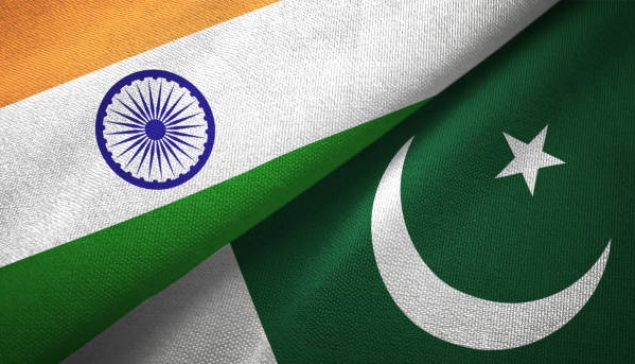
India ceases all trade with Pakistan following terrorist attacks

Following a devastating genocide in Pahalgam, India, the Indian government has responded with a series of assertive measures against Pakistan.

These actions include the significant suspension of the Indus Waters Treaty, the cancellation of all visas for Pakistani citizens, a downgrading of diplomatic ties accompanied by a reduction in mission strength on both sides, and the sealing of the vital Atari border trade route.

Pakistan has swiftly retaliated by revoking all trade activities with India, closing the Wagah border with immediate effect, placing all bilateral agreements, including the long-standing Shimla Peace Agreement, in abeyance, and closing its airspace to Indian airline companies, while vehemently stating that any attempt to impede its water flow as per the Indus treaty would be considered an act of war.

More about: ,

Follow Us

Subscribe Our Newsletter
Amazing Deals, Updates & Freebies In Your Inbox
Please fill the required field.

People's Poll

War on Trade: India's RMG in Peril

People's Poll -2

How sustainability is driving India's textile industry

Social & newsletter

Search