

TTLtd

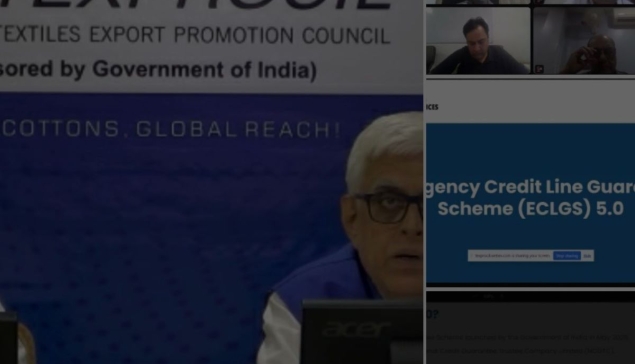
As per discussions at the Board Meeting held on 5th November 2025, T.T. Limited, one of India’s leading vertically integrated textile company, announced a series of new initiatives aimed at further diversification and growth.
The Company, after consolidating its operations, reducing debt, enhancing its brand, and restructuring its plant locations over the past few years, has now decided to enter the following new fields that will help it leverage its strengths, optimize resources, and move into higher-margin businesses.
1. Entering into Corrugated Box Manufacturing The Company is entering into the corrugated box manufacturing segment, a high-margin and fast-growing business that complements its existing textile operations.

SummitUp2025

Startup Ecosystem in a Changing World Order


In a world where markets shift overnight and innovation 

knows no borders, how can entrepreneurs, investors, and ecosystem builders stay ahead of change?


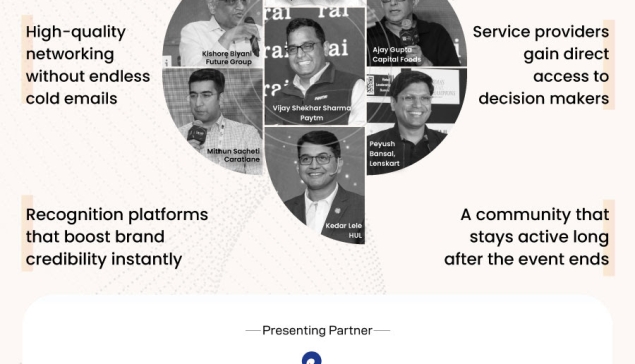
Join us at SummitUp 2025, NSRCEL’s annual entrepreneurship conclave, as we explore this very question.

Startup Ecosystem in a Changing World Order.

ItalianFashionDays

The timeless appeal of ‘Made in Italy’ remains unchallenged, yet at the recent Italian Fashion Days summit, industry leaders confronted a modern dilemma: how to make centuries-old craft resonate with India’s new-age consumers who value authenticity and purpose over prestige. The takeaway was clear—heritage itself needs reinvention.

Panelists observed a generational transformation led by Gen Z, a cohort that no longer seeks luxury for validation but pursues brands that reflect identity and meaning. For Italian fashion houses, this shift calls for bridging legacy with functionality—where heritage translates into relevance and performance. As one speaker noted, a brand’s history must empower today’s practicality, not remain confined to nostalgia.

ItalianFashionDays

Trussardi, the century-old Italian fashion house, has launched an ambitious strategic roadmap for India—envisioning the country not merely as a commercial territory but as a dynamic cultural crossroads.

Speaking on Day 2 of the inaugural Italian Fashion Days in India on October 29 in Mumbai, CEO Alberto Racca announced that the brand will make its Indian debut “within a couple of months,” marking the beginning of a major retail expansion. The rollout will start with flagship stores in key retail destinations across five leading cities.

Racca emphasized that this entry is “just the beginning.” Trussardi’s mission, he said, is to develop a profound cultural connection with India—understanding its people, needs, and evolving lifestyle beyond the market’s demographic or manufacturing appeal.

ItalianFashionDays

Italian Fashion Days in India: Strengthening Cross-Cultural Ties in Fashion.

Compiled by Salil ChawlaDirector, DFU Publications

Interacting on the sidelines of Italian Fashion Days in India held recently in New Delhi, Margherita Curro Sacchi and Maria Silvia Sacchi from The Platform Group, Italy, shared insightful perspectives on the evolving synergy between Italian and Indian fashion industries.

The Platform Group, a globally respected fashion media and industry network founded by seasoned journalist Maria Silvia Sacchi, is partnering with the Italian government to organize this multi-city initiative.

ItalianFashionDays

The inaugural Italian Fashion Days in India (Le Giornate della Moda Italiana nel Mondo) officially opened on October 28 at the Embassy of Italy in New Delhi, marking a new chapter in Italy–India cooperation. The three-city initiative, a first of its kind in India, forms a key pillar of Italy’s “Diplomacy and Growth Strategy” and will travel to Mumbai and Ahmedabad on October 29 and 30, respectively.

Fashion as a catalyst for business and cultural exchange

Italian representatives described the event as going well beyond a luxury showcase. Aurora Russi, Minister Counsellor at the Embassy of Italy, highlighted the program’s broader objective, noting that the Embassy was “delighted to bring some of our finest examples of fashion and the fashion industry to New Delhi, Mumbai, and Ahmedabad.” She added that while the event celebrates the “strength and excellence of Made in Italy,” it also emphasizes that “fashion serves as a driver of business and cultural exchange between our two countries.” Russi acknowledged that fashion is often viewed as luxury but stressed that it remains “a generator of wealth and opportunity at all levels.”

GSTRejig

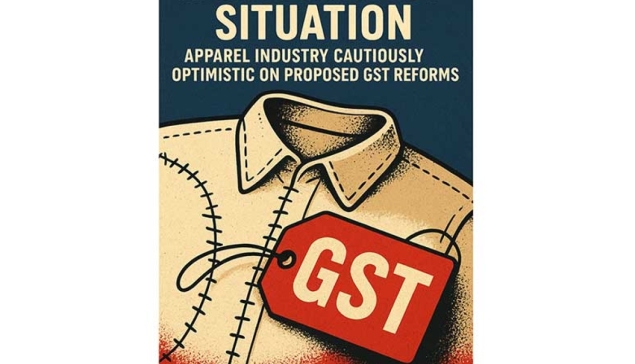
India’s organised apparel retail sector is primed for solid growth this year, fueled by the recent GST rationalisation. As Crisil Ratings highlights, lowering the GST rate to a uniform 5% for garments priced up to ₹2,500 extends the affordability of branded fashion deeper into tier-2 and tier-3 markets. Analysts project this policy will add up to 200 basis points to retailer revenues, anchoring sector growth at a strong 13-14% for the year. The new slab especially benefits price-conscious buyers, reviving demand and generating fresh employment—particularly among female workers in stitching and tailoring. While mid-premium and fast-fashion segments are set to gain, the shift to 18% GST on garments above ₹2,500 restricts premium product momentum, dampening sales in segments like wedding wear and handlooms. With 35% of organised sales in the premium bracket, the rebalancing of rates invites sharper competition and wider consumption. Ultimately, this timely GST reform positions India’s apparel retailers for resilient, inclusive sectoral expansion.

GSTRejig

GST 2.0 Powers the $350 Billion Textile Dream

The textile industry in India is massive, shaping livelihoods and exports alike. Today, the industry size is $179 billion and gives jobs to over 4.6 crore people, most of them women. The government now aims to almost double this size to $350 billion by 2030, creating even more employment and income opportunities for families across the country.

India’s organised domestic textile market is worth around $142-145 billion and when we include the largely unorganized sector, it’s closer to $155-160 billion. With the introduction of Next-Gen GST reforms like tax rationalization and a fibre-neutral regime, manufacturers can now pass on savings directly to buyers.

Apparel Demand Surges Amid Diwali 2025 Retail Boom: CAIT

The Confederation of All India Traders (CAIT) report on Diwali 2025 highlights a record-breaking surge in India’s apparel industry sales during the festive season. Total trade touched ₹6.05 lakh crore, marking a 25% increase over 2024. The rise was largely driven by reduced GST rates and the strong 'Vocal for Local' movement, with 87% of consumers preferring Indian-made products. Apparel and ready-made garments accounted for 7% of total sales, benefiting significantly from festive discounts and increased consumer confidence. The report underscores the critical role of small traders and traditional retail in driving this robust growth, helping create millions of temporary jobs. This festive boom reflects India's expanding domestic market and growing economic optimism.
CREDITS: This piece of info is automated generated by the internet and has not been edited and reviewed by us.

SkillDevelopment

Highlighting the immense potential of India’s Creative Economy and the crucial role of strategic skilling in shaping a vibrant, innovative future. Leveraging our rich cultural heritage and creative potential is essential for driving sustainable economic growth and global leadership.
As per UNESCO estimates, Cultural and Creative Industries generate over USD 2.25 trillion in global revenues and provide more than 30 million jobs worldwide.
In India, Creative Industries are estimated at over USD 30 billion, contributing between 2 to 7 percent of GDP, depending on what we define as Creative Industries, and generating about 8 percent of employment among working professionals.
India’s consumer spending driven by Creative Industries is already over USD 350 billion, and it is expected to cross USD 1 trillion by 2030.
The economic multiplier effect is huge: every USD 1 invested creates USD 2.5 in wealth.

StartupMahakumbh2025

Blissclub, Bengaluru based movement-first apparel brand for women, has been featured in LinkedIn’s 2025 Top Startups India list - a recognition that celebrates the country’s most innovative and fast-growing young companies where professionals most want to work.

This milestone underscores Blissclub’s meteoric rise in India’s D2C landscape and its growing impact in building an inclusive, community-first brand that empowers women to #KeepMoving with it’s mission to spread happiness through movement.

LinkedIn’s Top Startups 2025 ranks emerging companies based on key factors such as employee growth, job interest, and the ability to attract and keep top talent. Blissclub’s inclusion confirms its status as one of India’s fastest-growing and most loved D2C brands, along with being one of the few women-led startups shaping the future of India’s consumer market.

BeautyPlatform

As India enters its biggest shopping season, Smytten PulseAI’s latest Festive Beauty Study reveals a striking shift in how consumers are approaching beauty and self-care this year — it’s less about discounts and more about discernment this festive season. 

The report finds that 61% of Indian beauty shoppers are opting for branded and premium products over local or discounted alternatives, signalling a new wave of quality-first, brand-trusting buyers. Nearly 58% plan to spend more than last year, with average budgets between ₹3,000–₹4,000 — and high-income consumers exceeding ₹20,000 on beauty indulgence.

Follow Us

Subscribe Our Newsletter
Amazing Deals, Updates & Freebies In Your Inbox
Please fill the required field.

People's Poll

A Strategic Boost to Textiles Manufacturing: Manufacturing takes a centre stage

People's Poll -2

How sustainability is driving India's textile industry

Social & newsletter

Search